How smart campus infrastructure can support a resilient, low-carbon future
Key Highlights
- Focus on performance intelligence rather than wholesale replacement to optimize existing infrastructure and reduce costs.
- Use predictive modeling and advanced analysis tools to identify hidden system vulnerabilities and inform targeted upgrades.
- Diversify utility pathways, including hybrid energy and reclaimed water systems, to enhance campus resilience against disruptions.
- Sequence electrification upgrades in alignment with asset life cycles and institutional priorities for a phased, cost-effective transition.
- Prioritize lifecycle value, durability, and maintainability in infrastructure investments to ensure long-term reliability and sustainability.
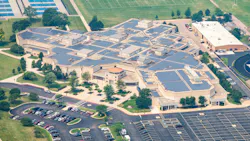
Across higher education, the most consequential sustainability and resiliency challenges are rarely the most visible. Beneath campuses lies an interconnected web of utilities, distribution networks, and legacy systems that quietly support everything from research continuity to student life. These systems often escape strategic attention until failure, escalating costs, or climate-driven disruptions force them into focus.
As institutions face growing pressure to decarbonize, reduce risk, and manage long-term operating costs, the most effective path forward is increasingly rooted in understanding how existing infrastructure is actually performing, and where its untapped optimization potential lies.
Start with performance, not replacement
Rather than defaulting to wholesale replacement, leading institutions are reframing infrastructure planning around performance intelligence. The question is no longer whether systems are old, but whether they are functioning in alignment with institutional goals for sustainability, reliability, and future adaptability.
In many cases, systemic limitations are the result of deferred maintenance, fragmented upgrades, or incompatible systems layered over time. Without a full systems-level understanding, campuses can misdiagnose issues and commit major capital to solving the wrong problem.
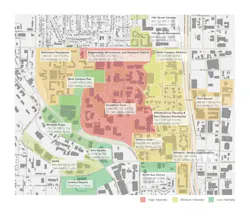
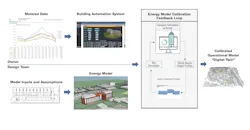
Predictive modeling and advanced systems analysis are changing that equation. By mapping utility flows, simulating demand scenarios, and identifying interdependencies, institutions can pinpoint where performance gaps exist and target upgrades that maximize impact while minimizing disruption.
Use data to reveal hidden infrastructure problems
Blind spots remain one of the greatest barriers to effective infrastructure planning. Many campuses lack the operational visibility needed to distinguish true system failures from inefficiencies, sequencing issues, or outdated assumptions.
Advanced analysis tools make hidden conditions visible. Instead of reacting to isolated symptoms, decision-makers gain a clear view into how systems behave under varying conditions, where vulnerabilities lie, and which interventions will yield the greatest return.
This shift transforms opaque infrastructure networks into strategic decision-making assets. It also improves communication with finance, facilities, and executive stakeholders by grounding future investments in evidence rather than assumptions.
Diversify utility systems to build campus resilience
Once system behaviors become clearer, risk exposure often comes into sharper focus. Campuses that rely heavily on single utility pathways, whether electrical, thermal, or water-based, remain vulnerable to disruptions from extreme weather, aging municipal systems, or operational failures.
In response, institutions are adopting diversified strategies that strengthen resilience while advancing sustainability goals. Hybrid energy systems, distributed thermal solutions, reclaimed water infrastructure, and localized backup systems all reduce dependence on single points of failure.
One especially compelling strategy is wastewater reuse for non-potable applications such as irrigation, cooling, and steam support. These approaches improve continuity, reduce strain on municipal resources, and embed resilience directly into long-term campus operations.
Sequence electrification around asset life cycles
Electrification remains essential to decarbonization, but the transition away from fossil-fuel-based infrastructure requires careful sequencing. The editorial opportunity here is not about speed alone, but about timing upgrades to coincide with asset life cycles, institutional priorities, and financial realities.
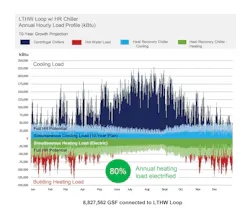
The emphasis shifts from “how fast can we replace” to how intelligently can we transition.
Prioritize lifecycle value in a high-cost environment
Rising construction costs, supply chain instability, and capital constraints are forcing a more disciplined approach to infrastructure spending. This environment actually creates an opportunity to sharpen strategy.
Instead of oversized replacement projects, campuses are increasingly prioritizing optimization, right-sizing, lifecycle performance, and long-term durability. The conversation shifts from first cost to enterprise value: reduced maintenance burdens, improved reliability, lower operational risk, and stronger long-term stewardship.
Material durability, underground utility resilience, and maintainability should all be positioned as strategic design decisions rather than technical footnotes.
Build the business case for infrastructure investment
Even when technical solutions are clear, progress often stalls at the institutional level. Budget pressures, competing priorities, and unclear ROI can delay critical decisions.
Reliable systems directly support research operations, academic programming, student experience, and campus reputation.
When leaders can clearly see the cost of inaction, whether through risk scenarios, deferred maintenance trajectories, or climate vulnerability modeling, hesitation is far more likely to shift into forward momentum.
A five-part framework for campus infrastructure planning
The revised guiding principles should now move away from “capacity” and focus instead on strategic systems performance:
- Treat infrastructure performance as a core institutional asset.
- Use predictive analysis to identify root causes, not just symptoms.
- Build resilience through diversified utility pathways.
- Align electrification with asset timing and enterprise priorities.
- Prioritize lifecycle value, reliability, and adaptability.
Together, these principles reinforce a smarter, more resilient framework for long-term campus modernization.
Optimize what exists before replacing it
The future of the resilient, low-carbon campus does not begin with demolition. It begins with visibility, intelligence, and strategic alignment.
Many universities already possess the foundational systems needed to support long-term goals. The real opportunity lies in understanding how those systems interact, where they underperform, and how targeted interventions can unlock greater reliability, sustainability, and resilience.
The lasting message for campus leaders is that every institution’s infrastructure story is unique, and the smartest path forward starts not with assumptions, but with disciplined evaluation and strategic action.
Dennis Potter, PE, LEED AP is a Senior Principal at Ballinger, an integrated design practice based in Philadelphia. A champion of flexible, efficient, and resilient solutions, he is a leader in sustainable systems design, applying his creativity and expertise to high-impact projects. Dennis can be reached at [email protected].