Why reliable in-building communications are becoming a campus facilities priority
Key Highlights
- In-building wireless systems like DAS and ERCES are essential for seamless communication during emergencies, supporting first responders and campus communities alike.
- Diverse building materials and ages create coverage gaps, making specialized wireless solutions critical for operational safety and compliance.
- Facilities teams now play a central role in selecting, installing, and maintaining these systems, ensuring ongoing reliability and adherence to fire and safety codes.
- Choosing the right vendor involves assessing long-term support, maintenance plans, and recertification processes to sustain system effectiveness.
- Investing in resilient communication infrastructure enhances campus safety, operational efficiency, and community confidence for the future.

For facility managers across colleges and universities, ensuring safe, resilient, and compliant buildings is a core responsibility. In an era of complex threats and high expectations for institutional preparedness, campus leaders are re-evaluating the very infrastructure that underpins their emergency response capabilities. From everyday medical incidents to large-scale critical events, the ability to communicate without failure is paramount.
This has brought a crucial, often overlooked, technology to the forefront: in-building wireless systems.

In a built environment where buildings vary in age, construction, and materials, maintaining reliable radio and cellular coverage is a significant challenge—one that increasingly falls on facilities teams to solve. Ensuring seamless communication for campus police, security teams, and municipal first responders is an operational necessity, not just a technical goal.
As schools and universities strive to create resilient and secure environments, investing in robust communication infrastructure is becoming one of the most critical decisions an institution can make.
The communication challenge hidden inside campus buildings
Unlike a single office building, a university campus is a sprawling, complex ecosystem. It comprises multiple buildings of varied ages, materials, and architectural styles. A signal that works perfectly in a modern glass atrium may disappear completely inside a century-old library with dense stone walls or in the subterranean levels of a science complex. This creates dangerous communication dead zones for both two-way radios used by first responders and the cellular devices relied upon by students and faculty.
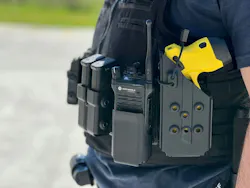
These gaps in coverage present significant risks:
- For Public Safety: A campus police officer responding to an incident in a dormitory basement may lose radio contact with dispatch, leaving them isolated and unable to coordinate with backup. Similarly, municipal fire or police departments arriving on campus may find their radios are ineffective indoors, slowing down a coordinated response when seconds are critical.
- For Students and Faculty: During an emergency, students and staff rely on their cell phones to receive mass notifications, call for help, and communicate with loved ones. Poor cellular coverage can prevent these life-saving alerts from reaching individuals and hinder them from reporting vital information.
- For Daily Operations: The challenges extend beyond emergencies. Routine maintenance, event management, and daily security patrols all depend on reliable connectivity that is often taken for granted until it fails.
Campus facility managers sit at the intersection of these needs. They are responsible for the physical environment’s performance, which enables (or hinders) communication.
Public Safety DAS and Cellular DAS: The infrastructure behind reliable coverage
To address these vulnerabilities, higher education institutions can turn to specialized in-building wireless solutions. These systems are designed to amplify and distribute radio and cellular signals throughout a campus, eliminating dead zones and ensuring reliable connectivity everywhere.
There are two primary types of systems that address these distinct needs:
- Public Safety DAS/ERCES: An Emergency Responder Communication Enhancement System (ERCES), often implemented as a type of Distributed Antenna System (DAS), is specifically designed to boost the radio frequencies used by police, fire, and EMS personnel. These public safety DAS / ERCES solutions are engineered to meet stringent fire codes, such as those set by the National Fire Protection Association (NFPA) and the International Fire Code (IFC). They ensure that first responders can communicate seamlessly inside every building on campus, from lecture halls and laboratories to parking garages and athletic arenas.
- Cellular DAS: While public safety systems support first responders, a separate but equally important solution addresses the needs of the campus community. A Cellular DAS enhances cell service for all major carriers.
Together, these systems create a comprehensive communication canopy that serves everyone on campus, enhancing both safety and the overall student experience.

Why this issue is increasingly the responsibility of the facilities team
Historically, in-building wireless solutions were viewed as IT infrastructure. Today, because these systems affect code compliance, construction coordination, and emergency readiness, facilities teams often own or co-own responsibility for them.
Facility leaders must consider:
- How new and existing buildings meet NFPA/IFC requirements
- How to integrate DAS/ ERCES with renovations and capital projects
- How to coordinate testing and recertification
- How to plan long-term maintenance
- How to ensure vendor accountability and lifecycle support
For many campuses, this is now a building-systems issue, not just a communications challenge.
Procuring and installing a DAS or ERCES is a significant undertaking, but the project does not end once the system is turned on. The true measure of its value lies in its ongoing reliability, especially during a crisis. This presents a new set of challenges for university administrators and project managers.
These systems are not “set and forget” technologies. They require specialized expertise to manage and maintain, and finding a reliable contractor capable of providing full lifecycle support can be difficult. The ideal partner must demonstrate proficiency not just in initial design and installation, but also in ensuring the system’s long-term health and compliance.
Key considerations for facility managers should include:
- Properly assess the need for coverage: Do we need it everywhere or just some part of the building? ‘Benchmark’ surveys can create that heatmap of coverage requirements for you.
- Selecting the system: What system will make sense for the building or campus? There are multiple DAS and ERCES platforms available in the market. Which platform makes the most sense for the facilities? Budget, expandability of technology, and impact on facilities should be taken into account.
- Choosing the signal sources: How to choose the right signal sources for your DAS? Factors that impact the need for the facilities are frequencies and capacity (users in the building).
- Coordinated and on-budget installation: Can the contractor work effectively with the university’s existing facilities teams, IT departments, and other third-party vendors to deliver the project on time and within budget, minimizing disruption to campus life?
- Ongoing maintenance and support: Does the provider offer a proactive maintenance plan to prevent system degradation? When issues arise, is there a dedicated support team capable of responding quickly to resolve them?
- Annual compliance and recertification: Public safety radio systems are subject to strict annual inspection and recertification requirements mandated by local fire marshals. A failure to maintain compliance can result in fines and, more importantly, a system that may not function when needed. The chosen partner must have a proven process for managing these annual renewals to keep the system compliant and operational.
Selecting a contractor should be viewed as choosing a long-term strategic partner. This partner is entrusted with a mission-critical life-safety system, and their ability to provide consistent, reliable service is just as important as their ability to install the hardware.
A strategic investment in resilience
Reliable in-building communications represent more than a technical upgrade. For facility leaders, they are a foundational component of emergency readiness, code compliance, and operational continuity.
As campus environments evolve and safety expectations increase, facilities teams have an opportunity to lead by implementing communication infrastructure that supports both everyday operations and life-saving interventions. Investing in DAS and ERCES now positions campuses for resilience, responsiveness, and community confidence for years to come.
John Thompson is the vice president of In-Building Wireless Solutions at Mobile Communications America (“MCA”). MCA's In-Building Wireless Solutions (IWS) Group is a premier integrator of and campus-wide wireless solutions — supplying best-in-class engineering design, project management, implementation, mentation, commissioning and maintenance services. To learn more, visit https://das.callmc.com/about/.