How pipe inspection technology can prevent costly school plumbing failures
Key Highlights
- Pipe inspection technology offers a direct view inside drain and sewer lines, revealing issues that are otherwise hidden from sight.
- Identifying the root cause of recurring problems helps prevent repeated failures and reduces unnecessary repairs.
- Inspection data supports better prioritization of repairs and more efficient use of maintenance budgets.
- Documentation from inspections provides valuable records for long-term planning and communication with stakeholders.
- Integrating inspections into preventive maintenance programs enhances system reliability and reduces unexpected disruptions.
When a drain backs up or a sewer line fails, the immediate priority for any facility is restoring service. But for facility managers responsible for maintaining schools, healthcare buildings, commercial properties and other large facilities, solving the immediate issue is only part of the challenge. The bigger question is understanding what caused the problem and whether it points to a larger concern.
A facility’s drain and sewer infrastructure plays a critical role in daily operations, yet many potential issues remain out of sight until problems occur. Pipes located beneath floors, parking areas, landscaping and roadways can develop problems for years before visible symptoms appear. By the time a serious backup or failure occurs, the damage may already require significant repairs, unexpected expenses, and disruption to normal operations.
In fact, recent federal research has shown how significant those disruptions can become: facility problems forced nearly one in five school districts to cancel classes in 2024–25, including one elementary school that closed following a sewer backup.
Pipe inspection technology has changed how maintenance professionals approach these challenges. Instead of relying solely on symptoms, inspections provide a direct view inside drain and sewer lines, allowing teams to identify hidden issues, confirm the source of recurring problems, and make better-informed maintenance decisions.
For facility managers, this visibility creates an opportunity to move away from reactive repairs and toward a more proactive approach to infrastructure management.
Hidden pipe problems can disrupt school operations
Many piping issues begin as small defects that gradually worsen over time. A minor crack can allow roots to enter a pipe and expand into a larger obstruction. Corrosion can slowly weaken pipe walls or reduce the available flow inside the line. Shifting soil can cause pipe joints to separate or become misaligned. Grease, scale, and debris can accumulate until water flow becomes restricted.
Because these problems occur out of sight, they’re often difficult to diagnose without specialized inspection equipment.
A recurring clogged drain, slow-moving line, or occasional sewer odor may appear to be a routine maintenance issue, but these symptoms can indicate more serious conditions. Simply clearing a blockage may restore service temporarily, but if the underlying cause remains unresolved, the same problem may return.
For facilities with extensive plumbing infrastructure, repeated service calls can become costly over time. Emergency repairs may require shutting down areas of a building, disrupting occupants, and addressing damage caused by backups or leaks. Identifying issues before they become failures can help reduce these risks.
Pipe inspection cameras reveal what is causing recurring problems
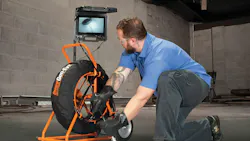
Pipe inspection cameras provide maintenance teams with a way to evaluate the condition inside the pipe without excavation. Using a flexible push rod system, a small camera is guided through the pipe while transmitting video footage back to the operator.
This real-time view allows professionals to see conditions that would otherwise remain hidden. Inspections can reveal cracks, root intrusion, corrosion, scale buildup, structural damage, and developing blockages. This information is valuable because it changes the maintenance process from one based on assumptions to one based on evidence.
For example, if a sewer line experiences repeated backups, an inspection can help determine whether the issue is caused by an isolated obstruction or a larger problem. A camera may reveal that roots are entering through a damaged section of pipe or that corrosion has reduced the pipe diameter and created conditions where debris continues to collect.
Understanding the actual condition of the pipe allows maintenance teams to determine the appropriate solution instead of repeatedly addressing the same symptom.
Diagnose the cause, not just the blockage
One of the greatest benefits of pipe inspection technology is the ability to identify the cause behind recurring problems. Drain cleaning and maintenance procedures can often restore flow, but they do not always address the reason a blockage developed in the first place. Without an inspection, it can be difficult to determine whether a problem resulted from normal buildup or a condition that will continue causing failures.
A camera inspection provides the information needed to make that distinction. For facility managers, this means fewer unnecessary repairs and better long-term planning. If an inspection confirms that a pipe is structurally sound and the issue is limited to buildup or debris, maintenance can focus on cleaning and prevention. If the inspection identifies damaged pipe sections or repeated intrusion points, managers can begin planning corrective action before an emergency occurs.
This approach helps reduce guesswork and allows repairs to be based on actual conditions rather than assumptions.
Use inspection data to prioritize repairs and budgets
Pipe inspections are not only useful for identifying immediate problems; they also provide valuable information for long-term maintenance planning.
Knowing the exact condition of pipes helps facility managers prioritize projects based on risk and available resources. Not every issue requires immediate replacement, and not every aging pipe requires the same level of attention. The ability to prioritize becomes increasingly important for districts confronting extensive deferred-maintenance backlogs, such as Montgomery County Public Schools (No. 15 in the 2026 AS&U 100 ranking of the largest school districts), which identified plumbing among the building systems contributing to roughly $3 billion in facilities needs.
Inspection results allow teams to evaluate which areas require urgent repairs. This helps maintenance departments make better use of budgets while reducing the likelihood of unexpected failures.
Many inspection systems can work with locating technology to determine the position of the camera head underground, helping maintenance professionals identify where a defect exists before excavation begins.
Accurate location information can reduce unnecessary digging, limit disruption to surrounding areas, and make repair work more efficient.
Document pipe conditions for long-term facilities planning
Another advantage of modern inspection technology is the ability to document findings. Recorded footage, images, and inspection notes create a valuable record of pipe conditions that can be referenced in the future. Condition documentation can also complement broader facility assessment and capital-planning efforts as districts evaluate aging infrastructure. Systems such as the Gen-Eye Fusion® combine high-definition imaging with recording and locating capabilities that help maintenance professionals diagnose problems more efficiently.
Documentation helps maintenance teams track changes over time and compare current conditions with previous inspections. It also provides useful information when communicating with contractors, building owners, administrators, or others involved in repair decisions.
For facility managers, having visual evidence of infrastructure conditions can make it easier to explain maintenance needs and support budgeting decisions. Instead of describing a hidden problem, teams can provide a clear record of what is happening inside the pipes.
Build pipe inspections into preventive maintenance
While pipe inspections are often performed after a problem occurs, they can provide even greater value when included as part of a preventive maintenance program.
Facilities with aging infrastructure, recurring drainage issues, or complex piping systems can benefit from scheduled inspections. Performing inspections before major disruptions allows maintenance teams to identify potential problems and plan repairs during convenient maintenance windows.
For educational facilities, inspections may be scheduled during summer breaks or other periods of lower occupancy. Commercial facilities may choose to inspect systems before renovations or after repeated drainage issues. Municipal and institutional properties can use inspection records to better understand the condition of their infrastructure over time.
A preventive inspection strategy helps facilities transition from emergency response to planned maintenance, improving reliability while reducing unexpected costs.
Turn better information into better maintenance decisions
Maintaining systems has always presented a challenge because so much of the system remains hidden. Pipe inspection technology helps solve that challenge by providing visibility into conditions that were once difficult or impossible to evaluate.
By identifying hidden problems early, confirming the cause of recurring issues, and providing accurate information for repair planning, inspections help facility managers make smarter decisions about their infrastructure.
The goal is not simply to find problems after they occur. The goal is to understand the condition of the pipe well enough to prevent failures, plan maintenance effectively, and protect the long-term value of a facility.
With the right inspection strategy, maintenance teams can replace guesswork with knowledge and make decisions based on what is actually happening inside the pipe.
Joe Kozlowski is the marketing director for General Pipe Cleaners, a prominent manufacturer of drain cleaning and plumbing equipment based in Pittsburgh, Pennsylvania.