Facility problems forced 1 in 5 school districts to cancel classes, GAO finds
Key Highlights
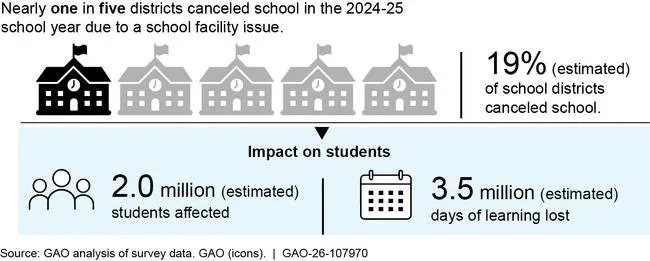
- 19% of districts canceled classes in 2024-25 due to facility problems, affecting approximately 2 million students.
- Nearly half of districts reported chronic issues like leaking roofs, mold, and failing HVAC systems, with some schools in unsafe or unusable conditions.
- Facility problems led to an estimated 3.5 million lost learning days, underscoring the impact of infrastructure on education quality.
- Budget shortfalls are a major barrier, with 55% of districts citing insufficient facilities funding and limited state and federal support.
- Districts with strong preventive maintenance programs experienced fewer disruptions and reduced emergency repair costs, demonstrating the value of proactive upkeep.
Facility problems rose to the level of forcing school cancellations in nearly one in five U.S. public school districts during the 2024-25 school year, according to a new Government Accountability Office (GAO) report examining the condition and operation of K-12 buildings nationwide.
GAO estimates that 19% of districts canceled classes for at least one day because of a facilities problem, which affected approximately 2 million students and resulted in an estimated 3.5 million lost days of learning. Plumbing emergencies, electrical problems, and extreme classroom temperatures were among the most frequent causes. The report, K-12 Education: Facility Issues Led About One in Five Districts to Cancel School in 2024-25, Affecting 2 Million Students, was publicly released on Sept. 14.
Nearly half of districts report chronic facility problems
While the school cancellations represent only the most severe consequences identified by GAO, an estimated 47% of districts had chronic facility problems in at least one school during 2024-25. Additionally, about 14% of schools nationwide were rated by district leaders as being in poor or very poor condition, meaning they had major problems that made them difficult to use, unusable, or unsafe for students and staff. Another third were considered to be in fair condition and had noticeable deterioration requiring attention within the next several years.
About 15% of district leaders reported serious safety concerns in at least one school, representing roughly 5,300 of the nation’s nearly 100,000 public schools.
GAO visited 21 schools in nine districts across Alabama, Maine, and Oregon, during which investigators found leaking roofs, deteriorated plumbing, poor ventilation, mold concerns, failing heating and cooling equipment, and other conditions that interfered with normal school operations.
In one school, a sewer backup forced an elementary school serving about 500 students and staff to close because of potential disease transmission. Another school closed after classroom temperatures reached 110 degrees. Elsewhere, GAO encountered classrooms above 90 degrees or below 60 degrees and heating systems that were 70 years old or older.
Even when buildings stayed open, facility problems affected instruction in a number of cases. GAO estimates that 18% of districts experienced chronic instructional disruptions tied to facilities, including uncomfortable classrooms, noise or odors, low morale, and displacement from classrooms. About 12% of districts moved learning online at least once because of building problems, and an estimated 10% canceled classes that were never made up.
More than half say facilities budgets fall short
Funding remains a major obstacle when it comes to keeping school facilities in safe and working order. A majority of districts (55%) said their most recent facilities budget was insufficient to meet their needs, according to GAO. District leaders also reported that facilities spending is often among the first areas to experience cuts when financial pressure increases, leading to deferred maintenance backlogs and capital projects being postponed.