School closure plans in Philadelphia and Oregon raise questions about aging facilities and declining enrollment
Key Highlights
- Philadelphia’s union says targeted maintenance and cleaning could improve school conditions, while district officials argue repairs would not resolve broader modernization needs or declining enrollment.
- Portland’s proposed closures could leave the district with ongoing costs for vacant buildings and may not deliver substantial immediate savings.
- Salem-Keizer estimates its proposal would remove about 332,000 square feet of underused space and raise elementary building utilization from 64% to 71%.
- The cases underscore the need for reliable facility assessments, enrollment projections and long-range planning that accounts for transportation, educational programs and the costs of unused properties.
School districts in Philadelphia and Oregon are facing difficult decisions about closing aging, underutilized schools as declining enrollment, rising maintenance costs, and budget constraints put increasing pressure on their facilities portfolios.
In Philadelphia, the teachers union has proposed a $25 million alternative to a school district plan that calls for closing 17 schools. Meanwhile, Portland Public Schools is considering closing as many as 14 schools, and Oregon’s Salem-Keizer district has proposed closing six elementary schools.
Although the districts are at different stages of the decision-making process, their plans highlight a common challenge for education facilities leaders: determining whether to invest in maintaining and modernizing existing buildings or consolidate students into fewer facilities.
The challenges for school administrators who are facing drops in student populations extend well beyond these districts, too. According to AS&U’s 2026 analysis of enrollment trends among the nation's 100 largest school districts, 58 of those districts experienced enrollment declines in 2024–25, collectively losing more than 49,000 students compared with the previous year. Although overall enrollment in those districts decreased by just 0.5%, the uneven declines are raising consequential questions about school capacity, building utilization, and where districts should direct limited construction and renovation dollars.
Philadelphia teachers union proposes alternative to 17 school closures
The Philadelphia Federation of Teachers (PFT) announced a Facilities Action Plan on Nov. 11 that it says could prevent the closure of 17 schools by addressing immediate building deficiencies through targeted repairs, maintenance, and cleaning. The union estimates that approximately $25.35 million in first-year investments could improve conditions at the schools, using money it says is already available in the district’s operating and capital budgets.
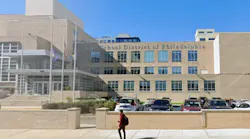
The proposal challenges the School District of Philadelphia’s 10-year, $3 billion facilities master plan, approved by the Board of Education in April, which includes closing 17 school programs, modernizing 169 campuses, and consolidating educational resources to address declining enrollment and deteriorating infrastructure. Ten schools are scheduled to close at the end of the 2026–27 academic year, with the remaining closures phased in over subsequent years.
The teachers union argues that years of inadequate maintenance have contributed to poor building conditions and that improving existing schools could help retain students and preserve neighborhood educational resources.
PFT President Arthur G. Steinberg commented in a press release:
“When a boiler or ventilation system breaks down and isn’t fixed in a timely manner, small problems grow into big ones. A little mold in the corner of one classroom spreads to other classrooms on that floor, then classrooms in the floor above, if repair and remediation needs are not addressed in a timely fashion. The PFT Facilities Action Plan calls on the District to prioritize building needs and focus on making all schools acceptable and attractive for families weighing other education options. The status quo of the District doing too little and too late for our buildings is not acceptable.”
PFT’s proposal calls for establishing rapid-response maintenance and cleaning teams to address problems involving plumbing, electrical systems, ventilation, water intrusion, and other building deficiencies. Union officials claim that current maintenance requests can remain unresolved for weeks or months.
However, district officials argue that the proposal doesn’t adequately address the larger challenges associated with aging buildings, declining enrollment, and the long-term cost of operating underutilized facilities that have led to the decision to close many faciliites.
According to a Nov. 11 report from CBS Philadelphia, the district estimates that the 17 schools have approximately $298 million in documented facilities deficiencies, including nearly $50 million needed for HVAC installations at five schools. The district maintains that while the union’s proposed investment could address some immediate maintenance problems, it wouldn’t eliminate the need for more comprehensive renovations or resolve ongoing enrollment declines.
The two cost estimates represent different scopes of work, with the union’s proposal focusing on initial repairs and improvements, while the district’s figures reflect more extensive building deficiencies.
Portland considers closing up to 14 schools
Similar concerns are driving a school consolidation debate in Portland, Oregon, where district officials are evaluating two scenarios that would close either 11 or 14 schools beginning in fall 2027. The proposals are part of Portland Public Schools’ Rightsize, Right Supports, Right for Students initiative, which seeks to align school facilities and educational programs with declining enrollment.
Portland Public Schools (PPS) faces a projected budget shortfall exceeding $65 million for the 2027–28 school year, adding urgency to decisions about building utilization and resource allocation.
“We cannot continue to spread fewer resources across the same number of buildings and expect to deliver the educational experiences our students deserve,” PPS Superintendent Kimberlee Armstrong told Oregon Public Broadcasting (OPB). However, consolidating schools would not necessarily eliminate the district’s financial challenges.
According to KATU reporting on Nov. 4, district officials have acknowledged that closures could produce limited immediate savings because many staff members would be reassigned rather than eliminated, and vacant buildings would also continue to require maintenance, security, and other expenditures.