What is deferred maintenance in schools and universities?
Key Highlights
- Deferred maintenance is necessary repair or replacement work postponed beyond when it should have been completed.
- Insufficient funding, staffing constraints, procurement delays, and competing priorities can contribute to growing maintenance backlogs.
- Facility condition assessments and Facility Condition Index measurements help leaders document needs and compare repair costs with building value.
- Prioritize life safety, code compliance, critical infrastructure, and repairs that prevent further damage or instructional disruption.
- Regular preventive maintenance, accurate building records, and multiyear capital plans can help control costs and reduce future backlogs.
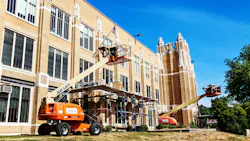
Deferred maintenance is one of the most persistent challenges facing school districts and higher education institutions today (see sidebar for related content). As buildings age and budgets tighten, facilities leaders often need to decide which repairs can be completed immediately and which of them can wait for a later date—but often not without consequences.
For instance, postponing a roof replacement, HVAC upgrade, or plumbing repair may help an institution meet short-term financial obligations, but unresolved problems can lead to more extensive deterioration, higher costs, and disruptions to educational operations.
The impact of deferred maintenance
- North Carolina schools face nearly $18 billion in facilities needs over next five years
- Louisiana assessment identifies $4 billion deferred maintenance backlog at public colleges
- Henrico schools face $92 million mechanical backlog as HVAC failures persist
- University of Maine faces $19 million budget gap amid enrollment pressures, deferred maintenance
- HVAC problems put school maintenance pressures in focus as students return
- Tulsa schools face 185 HVAC work orders as district plans $67.8 million in system upgrades
The scale of the challenge for school districts across the U.S. is substantial, with a majority reporting that they're facing budget shortfalls. In fact, a September 2026 report from the U.S. Government Accountability Office found that 55% of public school districts considered their most recent facilities budgets insufficient to meet their needs. The agency also found that districts with limited capacity for preventive maintenance experienced more chronic building problems and instructional disruptions.
Therefore, understanding deferred maintenance—and how to manage it—is essential to effective school facilities planning.
What does deferred maintenance mean?
Deferred maintenance refers to necessary repairs, maintenance activities, or building system replacements that are postponed rather than completed when needed.
The Government Accountability Office, citing federal accounting standards, defines it as “maintenance that was not performed when required or scheduled and was delayed until a future period.”
In education facilities, common examples include:
- Postponing replacement of an aging roof that has exceeded its useful life.
- Delaying repairs or replacement of inefficient or deteriorating HVAC equipment.
- Deferring plumbing repairs, electrical upgrades, or replacement of damaged building components.
- Putting off pavement repairs, exterior maintenance, or other necessary improvements because funding is unavailable.
It’s important to note that deferred maintenance is different from routine maintenance, which includes regular activities such as replacing air filters, inspecting equipment, cleaning systems, and performing minor repairs throughout a facility by a maintenance team. It also differs from preventive maintenance, which is scheduled to reduce the likelihood of equipment failures and extend the useful life of building systems.
A planned replacement scheduled for the end of a system’s useful life isn’t necessarily deferred maintenance, however. The backlog develops when work that should already have been completed remains unfinished.
Why do schools and universities defer maintenance?
The most common reason school districts find themselves in a maintenance backlog is insufficient funding. School districts are required to balance facilities needs against instructional programs, staffing, transportation, technology, and other expenses, which have to be carefully managed to avoid shortfalls in the operating budget. Likewise, colleges and universities face similar pressures while managing academic buildings, laboratories, residence halls, athletic facilities, and campus infrastructure.
When operating budgets are tight, facilities teams might opt to postpone projects that don’t seem to require immediate attention, but the consequences can have significant impact, which has been clear in recent school funding decisions. For example, in November 2026, Ohio’s Winton Woods City School District announced plans to suspend or delay roofing, paving, and HVAC maintenance projects after voters rejected an operating levy intended to generate additional revenue for district expenses. The decision demonstrates how a school district’s financial challenges can affect building maintenance even when facilities are relatively new or have undergone significant modernization.
Deferred maintenance can also result from competing construction priorities, limited maintenance staffing, equipment procurement delays, or insufficient information about building conditions.
How much deferred maintenance exists in U.S. schools?
The full national backlog is difficult to quantify because districts use different assessment methods and don’t always maintain consistent records of building deficiencies. However, national research illustrates the scale of school infrastructure funding needs.
The 2025 State of Our Schools report, published in 2026 by the 21st Century School Fund, International WELL Building Institute, and National Council on School Facilities, estimated that the nation’s public K–12 facilities face an annual funding gap of approximately $85 billion for maintenance, operations, and capital investment. That number represents a broader annual investment shortfall, not the total deferred maintenance backlog.
State-level assessments provide further insight into just how sizeable and far-reaching the issue really is. North Carolina’s 2025–26 statewide facilities needs survey identified nearly $18 billion in projected school infrastructure needs over five years, including approximately $9.77 billion for renovations.
HVAC improvements alone accounted for more than $2 billion in projected costs, while repairs and deferred maintenance were the most frequently cited reasons for proposed projects. Although not every identified renovation qualifies as deferred maintenance, the findings illustrate the growing financial challenge of maintaining and renewing existing educational buildings.
What happens when maintenance is postponed?
Delaying necessary repairs to a school or university building can increase the eventual cost of correcting a problem if it persists long enough. For example, a deteriorating roof may initially require localized repairs, but if water intrusion continues over time, damage can spread to insulation, ceilings, interior finishes, and electrical equipment—and with a much higher price tag.
Similarly, an aging HVAC system that doesn’t receive proper maintenance regularly may start to consume more energy, struggle to maintain comfortable classroom temperatures, and become more vulnerable to unexpected failures.
The Environmental Protection Agency’s preventive maintenance guidance for schools emphasizes regular inspection and maintenance of HVAC systems, roofs, and other building components to help prevent indoor air quality problems and expensive repairs.
The effects of deteriorating facilities often extends to students and staff, resulting not only in occupant discomfort but in closures that affect the entire community. According to the GAO’s September 2026 report, approximately 19% of public school districts canceled classes because of facilities problems during the 2024–25 school year. Those cancellations affected an estimated 2 million students and resulted in approximately 3.5 million lost days of learning.
Not all of those disruptions were directly attributable to deferred maintenance, of course, but the findings demonstrate how building deficiencies can directly interfere with education.
How can facilities leaders measure deferred maintenance?
One of the most important tools available to school facilities teams is a facility condition assessment (FCA), which evaluates the condition of a building’s major systems and identifies repair, renewal, and replacement needs. According to the National Center on School Infrastructure, an FCA typically examines roofing, HVAC, electrical and plumbing systems, exterior components, interior finishes, and site improvements. Assessments can help facilities administrators determine which projects require immediate action, estimate their costs, and establish priorities for future investment.
Many institutions also use what’s known as a Facility Condition Index (FCI) to compare the estimated cost of correcting building deficiencies with the building’s current replacement value. For example, if a school has $2 million in identified repair and renewal needs and an estimated replacement value of $20 million, its FCI would be 10%.
A lower FCI generally indicates fewer identified deficiencies relative to replacement value. However, the measure does not fully capture educational adequacy, program suitability, or the urgency of individual safety concerns.
How should schools prioritize deferred maintenance?
Because most institutions simply can’t address every deficiency simultaneously, facilities leaders need a systematic approach to determining which projects should receive funding first. Projects involving life safety, building code compliance, accessibility, and critical infrastructure generally require immediate attention.
Other priorities may include repairs that prevent additional damage, protect instructional continuity, extend equipment life, or reduce energy and maintenance expenses, for example.
The professional association APPA recommends evaluating deferred maintenance projects based on both the urgency of the deficiency and the importance of the affected building to the institution’s mission. A failing HVAC system serving an occupied classroom building, for example, may warrant higher priority than cosmetic improvements in a building scheduled for future renovation.
School facilities administrators also should consider whether replacing an aging system would be more cost-effective than continuing repairs. Combining condition assessment findings with anticipated enrollment changes, space utilization data, and long-range capital plans can help institutions avoid investing heavily in buildings that may eventually be consolidated, repurposed, or replaced.
How can educational institutions reduce their maintenance backlogs?
Reducing deferred maintenance requires more than just completing individual repair projects, obviously. Cutting into backlogs largely depends on establishing a consistent process for identifying deficiencies, planning investments, and preventing new problems from accumulating.
Facilities leaders and teams can start by maintaining accurate building inventories, documenting equipment age and condition, and conducting regular facility assessments. With that information in hand, they can start to develop a multiyear capital improvement plan that identifies project priorities, estimated costs, funding sources, and implementation schedules.
Preventive maintenance is an equally important part of the long-term process for reducing maintenance backlogs, where things like regular inspections, equipment servicing, and timely minor repairs can help extend the life of building systems and reduce unexpected failures.
Institutions should also update their maintenance budgets to reflect building age, equipment replacement cycles, and changing operating requirements rather than relying exclusively on historical spending levels. Most importantly, facilities administrators need to communicate the consequences of postponing repairs to school boards, university administrators, and other decision-makers. A documented maintenance backlog, supported by condition assessments and realistic cost estimates, can help leaders understand the financial and operational trade-offs associated with delaying necessary work.
Why It Matters
Deferred maintenance is more than simply a facilities budgeting problem; it can directly affect the reliability, safety, and availability of educational spaces and the people within them. The national implications can’t be ignored either, as the case studies in this article have illustrated. For K–12 and higher education facilities leaders, the lesson is clear: Regular building assessments, preventive maintenance, and coordinated long-range capital planning are essential to controlling costs, protecting institutional investments, and maintaining reliable learning environments for the long term.