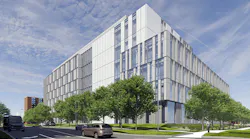
University of Iowa shifts cancer research expansion from new construction to $13 million renovation
Key Highlights
- The project will transform the building’s unfinished sixth floor into flexible laboratories, support areas, faculty offices, and collaboration spaces.
- Funding includes $9 million in university public-private partnership funds and $4 million from Carver College of Medicine reserves.
- Construction is expected to start in spring 2027, with completion targeted for summer 2028.
- The space will support the Institute for CANcer Drug DIscovery and Development, a collaboration focused on advancing cancer treatments.
- The university estimates annual operating expenses of $400,000 and deferred-maintenance costs of $172,000 for the completed space.
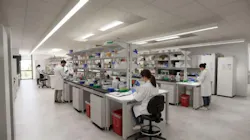
The University of Iowa has announced that it is moving forward with a $13 million project to expand its cancer research facilities within an existing campus building, abandoning previous plans to construct a standalone research center due to financial constraints. The university’s College of Pharmacy project will transform unfinished space on the sixth floor of the building into flexible research laboratories, shared support areas, and collaborative spaces serving scientists from the College of Pharmacy and Carver College of Medicine.
The Iowa Board of Regents’ Property and Facilities Committee approved a capital register that included the project during its November 11–12 meeting. The revised approach reflects the financial challenges facing academic medical centers as they seek to expand research capabilities while managing construction costs, operating expenses, and uncertainty surrounding federal research funding.
$13 million renovation will expand cancer research laboratories
The project will build out shell space within the College of Pharmacy Building, which opened in 2020, allowing the university to expand its research capacity without constructing an entirely new facility. According to the Board of Regents’ November capital improvement documents, the project will include flexible research laboratories, specialized equipment, shared support spaces, faculty offices, and collaboration areas.
The $13 million budget includes approximately $10 million for construction, $1.48 million for planning, design, and project management, $505,000 for furniture and equipment, and $996,000 for contingencies. The university notes that funding will come from two sources, including $9 million in university public-private partnership funds and $4 million from Carver College of Medicine reserves. It also estimates that the completed space will require approximately $400,000 in annual operating expenditures and an additional $172,000 in annual deferred-maintenance costs, both supported by university general funds.
Because the project involves previously unfinished space, it won’t eliminate existing deferred maintenance elsewhere on campus.
Construction is expected to begin in spring 2027, with completion targeted for summer 2028.
Budget pressures prompt shift away from standalone research building
The decision represents a significant departure from the university’s previous capital development strategy, in which the Iowa Board of Regents authorized planning for a new standalone cancer-focused research facility back in September 2024. However, university officials now say that project won’t advance at this time because of projected budget constraints. Instead, the university is evaluating opportunities to provide additional laboratory space within existing buildings across its health sciences campus—and the College of Pharmacy project is one of several initiatives being considered to meet those needs.
According to KCRG’s November 11 reporting, financial uncertainty, including potential changes to federal research funding, is affecting the university’s ability to invest in new facilities and sustain their long-term operating costs.