Rice University breaks ground on 200,000-square-foot research hub in Houston
Key Highlights
- Rice will occupy nearly 80,000 square feet of the Arc, with the remaining space available to outside organizations.
- The building will feature flexible floor plates, 15-foot floor-to-floor heights, advanced HVAC, high-capacity electrical service, and backup power.
- The Arc is designed to meet LEED Gold criteria and will include meeting spaces, an amenity lounge, fitness center, outdoor plazas, and retail and dining areas.
- Rice’s AI Foundry will connect faculty and industry partners to develop and test practical AI applications.
- Construction is expected to be completed in the second quarter of 2028.
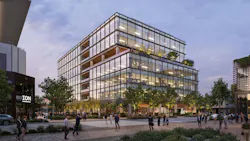
Rice University has broken ground on a nearly 200,000-square-foot research and innovation building in Houston that will expand the university’s research infrastructure and provide flexible laboratory and office space for academic and industry partners. The seven-story building, known as the Arc, will be constructed in the city’s Ion District, a 12-block innovation corridor anchored by Rice. Designed by HKS, the facility will accommodate university researchers, established companies, startups, and other organizations working in artificial intelligence, robotics, energy, and advanced technologies, according to an announcement by the university on Nov. 4.
Rice will occupy nearly 80,000 square feet, or approximately 40% of the building, with the remaining space available to outside organizations seeking proximity to university research and Houston’s technology sector. Construction is expected to be completed in the second quarter of 2028.
Building designed for adaptable research environments
The Arc is being designed to accommodate changing laboratory and workplace requirements, with an emphasis on flexible spaces and the infrastructure needed to support advanced research.
David Sholl, Rice executive vice president for research, said in a press release:
“The closer researchers are to the people confronting real-world problems, the more opportunities there are to identify important questions, test ideas and improve solutions. The Arc gives us an environment built specifically for that kind of sustained collaboration.”
Floor plates will range from 28,000 to 31,000 square feet, providing substantial areas that can be configured for different laboratory, office, and collaborative functions. The building will feature 15-foot floor-to-floor heights and infrastructure capable of supporting advanced heating, ventilation, and air conditioning systems; high-capacity electrical service; emergency backup power; and specialized laboratory requirements. Those design features are particularly important in research buildings, where mechanical and electrical systems must accommodate equipment-intensive activities and changing technological needs.
The project also is designed to meet LEED Gold certification criteria and will incorporate smart-building technology and energy-saving features.
Beyond laboratories and offices, the building will include conference and meeting spaces, an amenity lounge, a fitness center, outdoor plazas, underground parking, secure bicycle storage, and retail and dining areas.
The Arc will share a public plaza with the existing Ion building, creating additional opportunities for collaboration among researchers, students, entrepreneurs, and private-sector organizations.
New facility will house Rice’s AI Foundry
One of the building’s principal occupants will be Rice University’s new AI Foundry, a collaborative research initiative intended to connect university faculty with industry partners working on practical applications of artificial intelligence. The Foundry will provide office and collaborative spaces where researchers can develop, test, and refine AI-based solutions for organizations across multiple sectors.
The planned facility is part of a broader university investment in research and academic programming. In October, Rice announced a university-wide AI initiative that includes recruiting 75 AI-focused faculty members across multiple disciplines and expanding related academic courses and degree programs.