Rethinking school restrooms for safety, sustainability, and long-term performance
Key Highlights
- Design restrooms as integrated systems to improve performance and simplify maintenance tasks.
- Prioritize water containment strategies to enhance safety and reduce cleaning efforts.
- Use durable, high-use fixtures to withstand wear, vandalism, and frequent use.
- Minimize touchpoints and incorporate touch-free technology to support hygiene and ease of use.
- Incorporate accessibility features early in the design process to create inclusive environments and avoid costly retrofits.
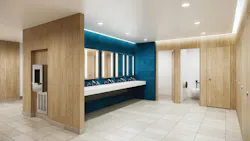
Restrooms are among the most heavily used and often overlooked spaces in education facilities. As schools face rising sustainability goals, tighter budgets, and increased expectations around safety and accessibility, these environments are becoming a critical focus for design and operations. By rethinking restrooms as integrated systems rather than a collection of individual fixtures, facilities teams can reduce maintenance demands, improve safety, and better support long-term performance.
An Overlooked Pressure Point
Across K–12 schools and higher education campuses, facilities teams are being asked to do more with less. Budgets are constrained, staffing shortages persist, and expectations around sustainability continue to rise.
Yet one of the most consistent sources of operational strain is often hiding in plain sight: the restroom.
Restrooms are among the most heavily used spaces in any school building. They operate continuously throughout the day, serve a wide range of users, and are subject to high traffic and heavy wear. These environments directly impact water consumption, maintenance workload, and safety conditions.
At the same time, they are often designed as a collection of separate components rather than coordinated systems. Over time, that approach can create inefficiencies that compound, especially in environments where reliability and ease of maintenance are critical.
Why It Matters Now
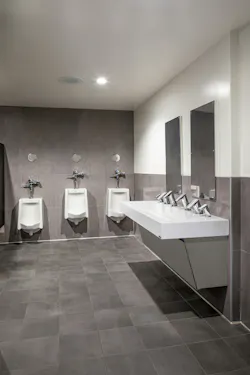
Sustainability goals are becoming more ambitious, and restrooms play a direct role in daily water use. Maintenance demands are increasing as facilities teams manage large portfolios with limited staff. Safety concerns, including slip hazards and vandalism, continue to affect operations in high-traffic environments.
There is also a growing focus on how spaces function from a user perspective. Cleanliness, accessibility, and ease of use are increasingly seen as baseline expectations.
Together, these factors are pushing facilities leaders to take a closer look at how restrooms are designed, specified, and maintained.
The Rise of Integrated Systems
One of the more notable shifts is the move toward treating restrooms as integrated systems rather than a collection of individual fixtures.
In traditional layouts, faucets, soap dispensers, hand dryers, and basins are installed and maintained independently. While familiar, this approach can lead to fragmented performance over time.
Today, facilities are implementing integrated systems such as sinks that combine faucets, soap dispensers, and hand dryers into a single, coordinated unit. In high-use school settings, consolidating these elements helps reduce traffic flow during peak periods while simplifying routine maintenance, leading to fewer service touchpoints and more consistent performance across the entire handwashing experience for students and staff.
Water and Safety
Improving how water is controlled within the restroom is one of the most immediate opportunities for impact.
A Strategic Opportunity
As schools and universities continue to invest in their facilities, restrooms present a meaningful opportunity to improve performance across multiple priorities.
These spaces sit at the intersection of safety, sustainability, maintenance, and user experience. Decisions made here influence daily operations in measurable ways.
By taking a more integrated approach, facilities leaders can reduce persistent challenges while supporting broader institutional goals. The result is a more efficient, reliable, and resilient environment.
Emerson Vogel is Product Line Manager for Sinks and Hand Dryers at Sloan, where he has spent the past four years helping develop and bring innovative commercial restroom solutions to market. Emerson focuses on combining customer needs, thoughtful design, and product innovation to improve the commercial restroom experience.