Harnessing solar power: A sustainable future for universities and rural schools
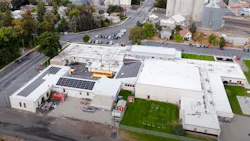
More than 1,000 universities and colleges have pledged to halve their emissions by 2030 and reach net-zero by 2050 as part of the United Nations’ Race to Zero for Universities and Colleges. Meeting these goals requires solutions that reduce emissions, strengthen financial resilience, and modernize campus operations. As these higher education institutions look for practical, high-impact steps to advance their goals, on-site solar photovoltaic (PV) energy is emerging as a valuable strategy.
Universities are well-positioned to benefit from solar because they consume large amounts of electricity and face increasing pressure to demonstrate meaningful sustainability progress. On-site solar generation helps these institutions take control of their energy strategy, reducing costs, advancing climate commitments, and adding to the academic experience.
Right-sizing solar
For universities and colleges to realize the value of solar power, they must start with right-sized system design. This doesn’t necessarily mean filling every available rooftop with panels; it means universities should design systems so that the solar energy produced is consumed entirely on site. This is especially important in states like Georgia, where utilities are not required to credit excess energy at retail rates. When power is “pushed” back to the grid, it is often valued at the utility’s “avoided cost”—a fraction of the retail rate—making oversized systems financially risky.
A right-sized system serves as a strategic hedge against utility-cost volatility by aligning solar power generation with the building’s real-time usage. By producing solar energy during expensive summer afternoons, institutions can insulate themselves from peak-hour price spikes and rising demand charges when the grid is most strained.
Ultimately, a right-sized approach can ensure the system offsets the most expensive electricity the university would usually have to purchase, protecting budgets and minimizing risks.
The challenges of market-based energy rates
Many universities purchase electricity under market-based rate structures, such as real-time pricing, with hourly rates that fluctuate with utility demand. But this makes colleges vulnerable to market volatility driven by seasonal changes or unexpected spikes because of infrastructure strain, fuel pricing, weather, or other factors.
On-site solar mitigates this risk because the solar system generates energy during some of the peak-demand periods. This can meaningfully reduce exposure to the highest-cost hours. For universities with large research facilities, athletic complexes, data centers, or 24/7 operations, this creates an important financial hedge.
Solar can lower peak energy spending to a more manageable level. This is extremely beneficial in times when energy costs are rising faster than many campuses can adjust their budgets.
Energy agreements
Meaningful utility offsets for universities can require large-scale solar installations with capital and maintenance requirements that typically exceed standard annual budget cycles.
To mitigate upfront costs and operational risk, many institutions are starting to use behind-the-meter (BTM) Power Purchase Agreements (PPAs). Through the third-party solar PPA model, this offers:
●Direct grid offset: Because the system is “behind-the-meter,” solar energy flows directly into the campus, reducing the amount of power purchased from the utility.
●Zero upfront cost: The solar provider handles all design, financing, installation, and long-term ownership.
●Pay-for-performance: The university pays only a fixed rate per kWh for the energy produced.
●Budget certainty: Energy pricing remains locked and predictable for 20 to 30 years and serves as a hedge against utility inflation.
●No operational burden: All maintenance, inverter replacements, and performance optimizations are managed by the provider and bundled into the PPA rate.
This approach eliminates the need for universities to take on debt or draw from capital reserves, while still delivering measurable, immediate cost savings.
Updating historic campuses
Universities often struggle with installing solar on older or more complex buildings. These sites may have limited roof space, older electrical infrastructure, or other structural constraints that complicate solar retrofits.
Although solar still can be added through careful planning, the most cost-effective path is to integrate solar considerations early in new constructions and major renovations. This includes:
●Designing flat, unobstructed roof space from the start
●Including electrical-room capacity for solar equipment
●Running conduit pathways during construction rather than retrofitting later
These early decisions can significantly reduce costs in the long run and eliminate future barriers.
Student recruitment
Solar’s impact extends beyond operations. Today’s students, particularly those in STEM, environmental studies, and architecture and design, expect universities to prioritize climate action. Sustainability efforts consistently rank among the factors influencing school choice, and on-site solar installations reinforce a university’s commitment.
Beyond recruitment, solar installations can support learning and engagement in coursework. This includes bolstering undergraduate and graduate research, creating real-time energy dashboards for classroom use, highlighting them in campus tours, and collaborating across engineering, policy, architecture, and business colleges.
Small reductions in electricity use can yield meaningful budget relief for universities. With stable and competitive pricing through a third-party PPA model, institutions can reinvest electricity cost savings into research funding, lab and classroom technology, student services, facility upgrades and capital projects. Cost savings and climate leadership don’t have to be competing priorities. Behind-the-meter solar can make them mutually reinforcing.
Emory installation
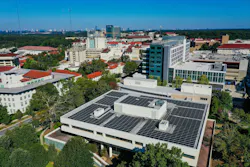
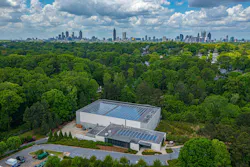
With a stated goal to achieve net-zero carbon emissions by 2050, Emory University has installed 15,000 solar panels across nine solar power systems on its Atlanta campus. They generate about 10% of the university’s peak energy requirements. Since the panels were installed, Emory has avoided over 10,000 metric tons of emissions by using on-site solar PV energy
As universities navigate volatile energy markets and rising climate expectations, on-site solar has evolved from a sustainability initiative into a foundational financial strategy. Behind-the-meter solar is now an integral component of modern campus infrastructure and energy strategy. By right-sizing solar systems and leveraging third-party energy agreements, universities can secure predictable operating budgets, resilient energy systems, and a competitive edge in student recruitment.
On-site solar is an investment in institutional strength, academic excellence, and long-term financial stability. Universities that adopt solar are preparing their campuses and students for a resilient future.
Ellie Wilkoff is Utility Data Manager at Cherry Street Energy, a solar power company based in Atlanta.
Sidebar: Solar for rural schools
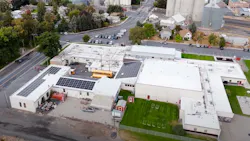
A solar program administered by Washington State University Extension’s energy office is powering rural schools and their communities.
About 20 schools are signed up for the project, called The Giving Grid, and more have expressed interest.
The participating schools usually pay nothing for the solar installation, which is funded by state tax credits. In return, they agree to use money saved on their power bills to benefit low-income students and their families for 10 years.
Partners in the project say it’s a win for all involved: the small, rural schools that likely couldn’t afford to convert to solar; the community members who’ll benefit; and the state, which has an interest in clean energy and in making it available equitably.
How the schools spend their extra revenue is largely up to them, as long as it directly benefits low-income community members, said Jody Opheim, executive director of Partners for Rural Washington, a nonprofit leading the project.
The Harrington School District in eastern Washington was the first installation completed. Some options being considered to benefit its 105 students are weekend food programs, technology upgrades, and field trips and experiences, said Superintendent Courtney Strozyk.
The schools taking part are expected to achieve nearly $20 million in energy bill savings over the expected 30-year life of the systems, said David Funk, president of Zero Emissions Northwest, the company that’s leading the project with Partners for Rural Washington.
It's also making renewable energy more widely available.
“Schools can benefit that would never be able to install infrastructure like this on their own," said Georgine Yorgey, director of the WSU Energy Program. "And many rural schools have high populations of low-income students who really could benefit.”
Under the program, solar systems are installed on or near schools. Utilities receive a state tax credit and reimburse the partners for the school solar installations.
Once installed, the solar systems could lead to other upgrades, like battery storage, so that the schools can be used as emergency shelters during extended power outages.