Innovative Duct Systems for Safer, Quieter, and More Efficient Schools
Key Highlights
- Phenolic duct systems help improve indoor air quality by reducing moisture infiltration, preventing mold growth, and maintaining cleaner airflow within educational facilities.
- These systems enhance acoustics by dampening noise transmission, supporting clearer communication and better learning conditions in classrooms.
- Advanced duct designs significantly reduce installation time and weight, facilitating quicker retrofits and minimizing disruption in occupied school buildings.
- High-performance insulation and sealing in phenolic ducts lower energy consumption by minimizing heat transfer and air leakage, supporting sustainability goals.
- Slimmer duct profiles and simplified retrofit options help address space constraints in aging buildings, enabling efficient upgrades within tight schedules.
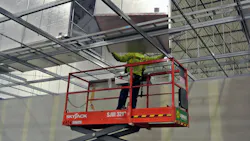
Educational facilities are under increasing pressure to create healthier, more energy-efficient learning environments as they deal with constrained budgets, labor shortages and compressed construction schedules. Across K-12 and higher education, school administrators, engineers and facility teams are evaluating HVAC systems not only for heating and cooling performance, but also for their broader impact on occupant comfort, indoor air quality (IAQ), energy efficiency, constructability and long-term operational costs.
According to 2024 data from the National Center for Education Statistics, the average age of main instructional buildings in U.S. public schools is nearly 50 years old, and more than one-third of school buildings were constructed before 1970. At the same time, the U.S. Department of Energy estimates public schools face a deferred maintenance backlog of about $270 billion tied to aging infrastructure, including HVAC systems.
As districts work to modernize facilities and improve building performance, they are placing greater attention on the role duct system design plays in supporting cleaner airflow, energy efficiency, acoustics and long-term operational performance. Pre-insulated phenolic duct systems and advanced phenolic duct liner specifications can help reduce air leakage, improve acoustic performance and simplify installation within modern educational facilities.
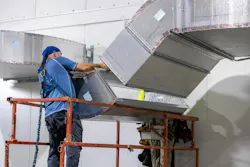
Healthier indoor learning
Supporting healthier indoor learning environments has become a growing priority for educational facilities as more schools recognize the connection between IAQ and student performance. According to the Environmental Protection Agency, indoor pollutant levels can be two to five times higher indoors than outdoors, an important concern in densely occupied school environments where students and staff spend extended hours each day. Poor IAQ has been linked to increased absenteeism, respiratory illnesses, and reduced cognitive performance. Studies have shown that improving school facilities and indoor environmental conditions can contribute to measurable gains in reading and math scores.
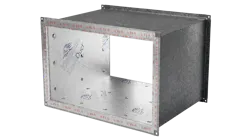
Unlike traditional soft, internally lined duct insulation systems, phenolic insulation is rigid and eliminates the potential for insulation erosion into the airstream, helping preserve air quality as conditioned air moves throughout a building. The insulation core remains resistant to moisture absorption and compression, helping maintain thermal stability and reducing the risk of condensation-related problems over time.
Smooth interior surfaces may further help reduce particulate accumulation while supporting long-term cleanliness and moisture resistance, an important consideration in aging educational facilities where condensation and humidity can contribute to mold growth and other indoor environmental concerns. Additionally, the rigid phenolic and interior FSK aluminum liner can be cleaned by traditional dry vacuum rotational brush cleaning methods, ensuring that a duct system can be properly maintained.
Acoustics and student performance
ANSI/ASA S12.60 standards recommend that core learning spaces maintain background noise levels of 35 dBA (A-weighted decibels) or lower to support effective communication and learning. However, classroom noise levels frequently reach 50 to 60 dBA or higher because of HVAC systems, exterior sound intrusion, and reverberation.
Research has shown that elevated noise levels can impair cognitive performance, and poor classroom acoustics may make it more difficult for students to listen and process spoken instruction. Conversely, studies have shown that improved acoustical conditions can increase speech intelligibility by more than 35%, helping support clearer communication.
Because HVAC systems directly affect overall classroom sound levels, duct system design has become an important acoustical consideration in educational facilities. Factors such as airflow design, insulation integration and duct construction can all influence sound attenuation and long-term acoustic performance.
Phenolic-insulated duct systems can improve acoustical performance in educational facilities by reducing both airflow-related noise and sound transmission through the duct assembly. The microperforated interior surface of the insulation helps dampen sound traveling through the duct system, reducing insertion loss and limiting “breakout noise” transmitted through duct walls. By integrating thermal insulation and sound attenuation within a single system, phenolic duct assemblies can support quieter classrooms and clearer communication without requiring additional sound attenuators, silencers or internal acoustic liners in some applications.
Improving energy efficiency
Educational institutions also face mounting pressure to improve energy efficiency while managing limited operating budgets. K-12 school districts in the United States spend nearly $8 billion annually on energy costs, making energy one of the largest operational expenses after personnel. In many districts, schools spend more on energy each year than on textbooks and computers combined; HVAC systems alone account for about 56% of total school energy use, according to the High School Sustainability Guide (HSSG).
As operating costs continue to rise, improving HVAC efficiency has become an important strategy for reducing energy consumption and helping schools better manage operational costs and overall building performance. Heat gain or loss during air distribution can increase HVAC loads, elevate energy consumption, and reduce overall system effectiveness, placing additional strain on aging infrastructure and already constrained operating budgets.
High-performance duct systems can help maintain more stable thermal conditions throughout air distribution networks by reducing heat transfer, limiting condensation risk and minimizing uncontrolled air leakage. Phenolic duct systems, for example, offer low thermal conductivity and high thermal performance within slimmer system profiles compared with some conventional duct insulation approaches. Some pre-insulated duct systems integrate insulation directly into the duct assembly, creating a continuous thermal barrier while reducing overall duct profile thickness and improving system efficiency.
These systems are available in a range of insulation values, helping support compliance with evolving efficiency standards such as ASHRAE 90.1 and the International Energy Conservation Code (IECC), which continue placing greater emphasis on high-performance mechanical systems and building envelopes. This flexibility can also support broader campus sustainability initiatives and long-term energy performance goals.
Duct leakage remains another important consideration in educational facilities. Leakage in older or less efficient systems can range from 10% to 20% of total airflow, contributing to unnecessary energy loss, inconsistent occupant comfort, and increased fan energy demand.
To help address these challenges, phenolic duct systems are engineered with high-performance sealing to achieve low air-leakage rates. Reduced leakage means less fan energy is required to maintain airflow, enabling conditioned air to reach occupied spaces more efficiently while supporting more consistent HVAC performance throughout the building.
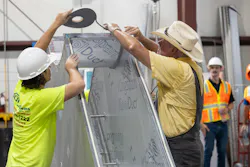
Construction and retrofit timelines
Educational construction projects present unique logistical challenges, particularly as school districts work to modernize aging infrastructure while minimizing disruption to day-to-day operations. The American Society of Civil Engineers gave U.S. schools a D+ grade in its 2025 Infrastructure Report Card, highlighting the growing strain deferred maintenance continues to place on educational facilities nationwide.
Many school renovations must be completed during short summer shutdown windows, often lasting only nine to 10 weeks, and retrofit work frequently takes place in occupied buildings where minimizing disruption is essential. At the same time, the construction industry continues to deal with significant labor shortages; estimates suggest the industry will need roughly 450,000 additional workers to meet growing demand across multiple sectors. Installation efficiency has therefore become increasingly important as contractors work within tighter schedules, labor constraints and active campus environments.
Compared with some traditional insulated duct assemblies, pre-insulated phenolic duct systems can also help accelerate installation timelines, reducing installation time by up to three times in some applications. The systems also can be up to 70% lighter than traditional insulated sheet-metal ductwork, helping simplify handling, transportation and installation.
These systems can also simplify retrofit coordination within constrained educational environments where structural limitations, existing specifications, occupied campuses, multistory buildings, or space constraints make major system redesigns impractical. In high-density ceiling plenums, slimmer duct profiles can further simplify coordination with lighting, plumbing and other building systems while preserving valuable ceiling space, an important consideration in older educational facilities where crowded ceiling cavities often complicate renovation work.
The need for adaptable retrofit strategies continues to grow nationwide. According to the Government Accountability Office, about 41% of school districts need to update or replace HVAC systems in at least half of their schools, representing roughly 36,000 schools across the country that require HVAC improvements. With deferred maintenance pressures continuing to grow across both K-12 and higher education, practical HVAC strategies that balance constructability, operational value, and occupant needs will remain a key consideration in school modernization efforts.
Ryne R. Sullivan is national sales manager for KoolDuct at Kingspan Insulation North America, which designs, fabricates and installs advanced duct systems.