Sustainable Athletic Flooring
By Don Brown
Sustainability continues to be an important focus in the construction of school and university facilities, where long-term cost efficiency and green initiatives are aligned with institutional values. The flooring industry is focused on innovations that emphasize renewable materials and energy efficiency. Educational institutions want sustainable flooring options that not only meet environmental requirements but also improve the longevity of their facilities and investments.
More healthful materials
Schools and universities are increasingly looking for flooring materials that meet environmental and health standards. As the flooring industry intensifies its focus on sustainability, one of the key trends in sustainable flooring is a shift in underlay materials. Facilty planners have shown a growing preference for organic materials over artificial options. For example, natural rubber pads, once considered niche, are becoming a more common sustainable alternative to plastic-based pads traditionally used in resilient flooring systems.
Although plastic pads are generally less expensive up front, they are not ideal for long-term use and cannot handle the excessive wear and tear that gymnasiums experience over many years. Plastic pads also off-gas harmful chemicals; volatile organic compounds (VOCs) or other substances released into the air may be harmful for long-term human exposure.
When choosing materials for school facilities, natural rubber pads offer numerous benefits. They are more durable and do not emit toxic chemicals. They are also a completely renewable resource. The shift in material preference reflects a broader trend in the flooring industry toward materials that are more healthful for the indoor environment and more sustainable.
Low-carbon options
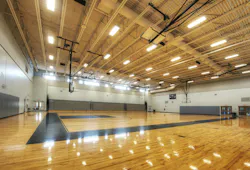
The demand for low-carbon, eco-friendly flooring highlights the sustainability of maple wood flooring. For over a century, maple flooring has been used in educational facilities. It remains a viable option for environmentally conscious projects. When harvested, maple wood sequesters carbon, locking it within the material rather than releasing it into the atmosphere. This contributes to a lower carbon footprint.
Locally sourced maple further reduces the environmental impact of a flooring installation by minimizing the need for long-distance transportation.
Sustainable production practices also enhance the benefit of maple wood flooring. Leftover wood or “off-fall” wood can be used in the manufacturing of flooring such as parquet wood flooring, reusing smaller pieces of wood that would otherwise be wasted.
Any wood scraps that cannot be used as flooring can be ground into biomass fuel and then used to heat the kilns in which the flooring is dried. This process reduces dependence on external energy sources and lowers emissions compared with advanced boilers. The zero-waste approach is common across the industry with many members of the Maple Flooring Manufacturers Association.
An economic argument
For some educational institutions, choosing eco-friendly materials may be difficult to justify because of budgets constraints. However, decision makers should consider the impact of their flooring selection over the long term. Flooring selection is one of many building components that are evaluated by the U.S. Green Building Council when it awards Leadership in Energy and Environmental Design (LEED) certification to a buildiing project.
Certain materials such as wood certified by the Forest Stewardship Council (FSC) help determine environmental impact. Although FSC-certified wood is often more expensive, it represents a sustainable choice that aligns with the goals of LEED certification.
Vinyl often is less expensive, but it is not as durable as wood floors and has a shorter lifespan. Over time, flooring choices like vinyl can require replacement. On the other hand, maple hardwood floors are a sustainable alternative, and it can be refinished instead of replaced, making for a longer life span. This reduces environmental impact and makes a more cost-effective choice in the long run.
For schools and universities where hardwood flooring may not be practical, synthetic options like polyurethane are an alternative. Compared with vinyl, polyurethane is considered a more sustainable choice; it produces fewer toxic chemicals during production and has a lower environmental footprint. Additionally, it is durable, low-maintenance, and well-suited for high-traffic school areas like a gymnasium or cafeteria.
By weighing the upfront costs of sustainable options, whether hardwood or polyurethane, against their long-term benefits, educational institutions can make informed decisions that align with their financial and environmental goals.
Combating greenwashing
Although the sustainability movement has made great strides over the years, it still has obstacles to overcome. One particular challenge is combating greenwashing, the practice of misleading consumers with false claims about the environmental friendliness of a product, service, or company.
For instance, some companies say they use sustainable materials such as FSC-certified wood, but they do not fully comply with the required chain-of-custody protocols, making their claims suspect.
To combat this, school facily planners should look for an Environmental Product Declaration (EPD), which is a comprehensive and verified document that outlines the environmental impact of a company’s products. The information provided in the declaration makes it easier for educational institutions to make informed decisions. For schools and universities looking to install sustainable flooring, requesting an EPD can help ensure that sustainability assertions of a flooring provider are backed by real data and not just marketing buzzwords.
Looking ahead
With renewable materials, smarter manufacturing processes and more environmentally conscious design choices, the flooring industry has options for schools and universities seeking to embrace sustainability. Natural rubber pads, sustainable wood options like maple, and zero-waste manufacturing processes are key initiatives that define the flooring landscape and support a greener future for educational institutions.
Ultimately, the transition to sustainable flooring is not just about protecting the environment, but also about creating more healthful, longer-lasting spaces for students and staff. When schools embrace these sustainable solutions, they can have a lasting impact on both their campuses and the planet.
Brown is the Technical Director for Action Floor Systems. With 38 years in the athletic flooring and construction industry, he has experience installing most types of athletic flooring.