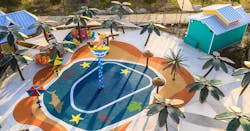
Splash pads bring a splash of joy to school environments. Like standard playgrounds, they promote inclusive play, physical activity and sensory development. Here, children run, jump and dance through interactive water features like sprays, dumping buckets and jets. Knowing the best materials for splash pad surfacing means ensuring children can fully experience the fun, learning and community that this play site provides.
What Are the Best Materials for Splash Pad Surfacing?
Knowing your options is crucial because it directly impacts children’s safety, maintenance costs and overall user experience. Here are the leading materials used to create splash pads.
1. Poured-in-Place Rubber
Poured-in-place rubber provides a seamless surface, excellent slip resistance and shock absorption properties. It is customizable, allowing you to get creative with the designs. The soft flooring helps reduce the impact of falls, making it a safe option for children. Additionally, it can withstand harsh weather conditions like heat, rain and cold.
2. Rubber Tiles
These prefabricated square or interlocking tiles are made from dense rubber. They are laid out over a prepared sub-base to form the splash pad surface. Their soft and cushioned texture provides slip resistance, durability and comfort, making it ideal for extended play. Rubber tiles require low maintenance because they can be cleaned easily with a hose or mild detergent.
3. Brushed Concrete
Brushed concrete is an inexpensive yet safe option, making it a solid choice for projects with tight financial constraints. Concrete is extremely durable and can withstand heavy use and extreme weather conditions for many years. It requires minimal maintenance, including occasional pressure washing and reapplication of sealant.
4. Polyolefin Granules
Polyolefin granules create surfaces that can withstand constant exposure to intense sunlight and chlorinated water without cracking, fading, or degrading over time. This material is inherently resistant to microbial growth and remains stable under UV exposure. It is a solid choice if you want to retain your surfacing’s color and integrity for years.
No Fault Surfaces as Your Top Surfacing Solution
No Fault Surfaces offers the best materials for splash pad surfacing designed to support accessibility, safety and long-term value. It is an expert in poured-in-place rubber surfacing and rubber tiles for splash pads, utilizing premium materials that perform well both indoors and outdoors. The company offers a one-year warranty for its water play surfaces, demonstrating its confidence in the quality of its products.
No Fault Surfaces is also committed to a greener environment. It uses recycled materials that can help your organization achieve credits from the Leadership in Energy and Environmental Design (LEED) program. The staff can work with you to create an eye-catching design to make play sessions more exciting for children.
Key Design and Safety Considerations for Splash Pad Materials
Knowing the best materials for splash pad surfacing is only the beginning. You must also consider the following factors before choosing the right surface provider for your organization.
● Slip resistance: A high-traction surface is crucial for minimizing falls and slips.
● Efficient drainage and water management: Surfaces should have a slope toward drains to prevent water pooling.
● Impact attenuation: Over 200,000 children get treated in hospital emergency rooms for playground-related injuries every year. Materials with good impact attenuation help protect children from serious accidents by providing cushioning.
● Accessibility and inclusivity: A smooth, seamless surface, such as poured-in-place rubber, can accommodate wheelchairs and other mobility devices without transitions. No Fault Surfaces can help provide this, as it meets the rigorous requirements of the American Society for Testing Materials (ASTM), the Americans with Disabilities Act (ADA) and the Architectural Barriers Act (ABA).
● UV and chemical resistance: Your chosen surface must be able to withstand sun exposure without degrading and resist damage from pool chemicals, such as chlorine.
Choosing the Best Materials for Splash Pad Surfacing
These four types of surfacing materials provide safety and durability. Select the material that meets your project needs and share your requirements with your provider. Make the smart choice and invest in fun, educational and memorable play sessions.
Sponsored by: