AIA research: 79% expect school safety considerations to increase in K–12 projects
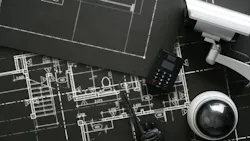
Nearly eight in 10 architects expect safety considerations to increase in K–12 education projects over the next three years, according to new research from the American Institute of Architects (AIA). AIA’s new Safety & Security in Design report found that 79% of respondents expect greater emphasis on safety in primary and secondary education projects, the highest percentage among the building sectors studied. Higher education followed at about 70%.
The findings point to a shift in how architects say they’re approaching security across school and university building projects today. Rather than treating it as a separate layer added late in the design process, respondents indicated that they increasingly incorporate access control, visibility, operational planning, materials, and other measures into the building itself. AIA says education, healthcare, institutional, and mission-critical projects report some of the highest levels of integration.
Controlled access leads education security strategies
These industry-specific findings show just how common some of those measures have become in recent years. In fact, among architects working on education projects, 95.3% reported using controlled access points as part of safety-related design decisions. Further, nearly 80% incorporate surveillance systems, 78.5% use physical barriers such as fencing or bollards, and 66.4% incorporate visibility strategies such as sightlines and shelter-room design.
The research also found that interior security measures appear in 62.4% of education projects, while 57% include reinforced exterior building elements such as windows or doors. About half use natural-surveillance approaches associated with Crime Prevention Through Environmental Design, or CPTED. Controlled access also stood apart when architects were asked to identify the most important security measure: 65.1% selected it, far ahead of any other strategy.
The emphasis on multiple layers echoes a point AS&U recently explored in “How risk assessments can guide smarter school security investments”. Rather than beginning with cameras, alarms, or other individual technologies, districts can first identify vulnerabilities and then determine which combination of physical improvements, policies, staffing, and technology addresses those risks.
Security is moving beyond minimum code requirements
Across all project types, 74% of respondents said their firms provide safety and security services beyond minimum code requirements at some level, according to AIA.
Why this matters
For school districts, the findings reinforce the value of deciding what a security project needs to accomplish before selecting individual measures. Controlled entrances may be nearly universal in current education design, but the report also shows architects relying on sightlines, circulation, exterior materials, barriers, surveillance, interior spaces, and operational planning in different combinations.
That puts more responsibility on facilities teams to coordinate security decisions across the building rather than treating each upgrade as a separate purchase. An access-control project can affect fire egress; new fencing can change circulation; reinforced entrances can influence visibility and visitor management; and renovations to older schools may limit what can be accomplished without broader capital work.
With nearly 79% of architects expecting safety considerations to grow in K–12 design, those tradeoffs are likely to show up more frequently in capital plans, renovation scopes, and project budgets over the next several years.
That doesn’t mean architects favor turning schools into hardened facilities, however. The report describes an evolution toward layered strategies intended to balance protection with accessibility, transparency, and occupant well-being. AIA’s education project profiles similarly emphasize that individual districts have different risk profiles, operational needs, and thresholds for security investment.
This becomes especially important in existing schools, where security improvements have to work within the constraints of older entrances, circulation patterns, doors, glazing, fire-protection systems, and other building conditions. AIA found that most architects address safety similarly in new and existing projects, although practical limitations can affect how fully measures are implemented in renovations.
Coordination among systems also matters when it comes to ensuring the safety and security of students and staff. An AS&U contributed article on integrated fire alarm and lockdown testing recently examined how access control, lockdown functions, and fire alarms can conflict if they’re designed, specified, and tested separately.
Cost remains a significant obstacle
Of course, the push for additional security also comes with familiar capital-planning constraints. AIA found that 65.4% of architects identify the higher cost of security products as a challenge when specifying safety-related building components. Other obstacles include evaluating performance differences among available solutions, integrating security with aesthetic goals, installation complexity, changing codes and standards, and limited technical guidance.
Budget pressures and value engineering also can affect whether security measures survive from planning through construction. The report notes that fragmented responsibility among owners, architects, consultants, manufacturers, and other project stakeholders can complicate decision-making.
AIA distributed the survey to 15,000 architect members through a 20-minute online questionnaire and supplemented the quantitative research with interviews involving five architects working in education. The study was developed with support from AIA strategic partner Oldcastle BuildingEnvelope.
About the Author
 Robert Nieminen
Market Content Director, American School & University, Architectural Products, BUILDINGS, and interiors+sources
Robert Nieminen is the Market Content Director of four leading B2B publications serving the commercial architecture and design industries: American School & University, Architectural Products, BUILDINGS, and interiors+sources. With a career rooted in editorial excellence and a passion for storytelling, Robert oversees a diverse content portfolio that spans award-winning feature articles, strategic podcast programming, and digital media initiatives aimed at empowering design professionals, facility managers, and commercial building stakeholders.
He is the host of the I Hear Design podcast and curates the Smart Buildings Technology Report, bringing thought leadership to the forefront of innovation in built environments. Robert leads editorial and creative direction for multiple industry award programs—including the Elev8 Design Awards and Product Innovation Awards—and is a recognized voice in sustainability, smart technology integration, and forward-thinking design.
Robert's work has earned him industry-wide recognition throughout his career, including:
- ASBPE Award (2019, 2018, 2017, 2015)—Best Regularly-Contributed Column; retrofit
- TABPI Award (2017, 2016)—Top 25 Entries, Cover Story; Retail Environments
- WPA Maggie Award (2011, 2010, 2008)—Best Publication, Trade; interiors+sources
- FOLIO: Eddie Gold Award (2022, 2007)—Best Feature Article & Special Section; interiors+sources
- Contributing author of ASID’s 2020 Outlook and State of Interior Design report, as well as The State of the Interior Design Profession (Fairchild Books, 2010), which earned a place on the International Federation of Interior Architects/Designers’ “50 Must Read, Must Have” book list.
Related
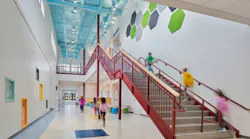 STEAM Corridor at Caribou Community School in Caribou, Maine