Planning for Relevance: How Institutional Strategy Should Shape Campus Investment
Key Highlights
- Institutions should start campus planning by defining their future purpose and the experiences that truly require physical presence.
- Different types of colleges—community, research, and traditional four-year—need tailored space strategies aligned with their unique roles and challenges.
- Existing buildings should be reassessed for their alignment with future goals, considering renovation or adaptive reuse over new construction when appropriate.
- Facilities should support key experiences like labs, simulation, mentorship, and community engagement that are difficult to replicate online.
- Strategic investments in campus infrastructure can enhance relevance, foster partnerships, and improve outcomes like enrollment, retention, and workforce readiness.
A confluence of pressures is forcing colleges and universities to think differently about their campuses. Artificial intelligence is changing how students learn and how employers evaluate skills. Costs continue to rise. Demographic shifts are tightening the enrollment market. At the same time, many institutions are trying to maintain aging buildings with limited capital.
First, there’s the elephant in the room: artificial intelligence. The ubiquitous use of large language models has created a fundamentally different environment for education. A recent Gallup poll found that 42% of bachelor’s students and 56% of associate-degree students said AI had caused them to give at least a fair amount of thought to changing their field of study.
Costs are not making those decisions easier either. Inflation-adjusted tuition and fees at public four-year colleges have more than doubled since 1995–96, rising 101% to $11,950 for the 2025–26 academic year.
Declining enrollment is being further driven by demographic pressure. WICHE projects the number of U.S. high school graduates will decline 13% between its 2025 peak and 2041.
The pressure to articulate value right now is real. Gallup reported in 2026 that only 12% of Americans rate four-year colleges as excellent or good at providing an affordable education. Students and families are asking more direct questions about their investment: What will I be able to do when I finish? Can I demonstrate those capabilities to an employer? Why does this experience require a physical campus? What can this institution provide that technology cannot?
For facilities leaders, architects and planners, those questions are changing where the conversation should begin. Before choosing a building type or capital project, institutions need to ask: What will be the unique value proposition for this institution in 10 years? Who will we serve? And perhaps most importantly, which experiences truly require a physical presence?
The answers should shape how an institution evaluates its campus, where physical space creates the most value, and what’s worth renovating, reusing, sharing, adapting, or building.
Different institutions need different kinds of space
Higher education is unlikely to move toward a single model because different institutions require unique space programming. Community colleges, research universities, and traditional four-year institutions all face different headwinds and opportunities, and the physical campus should reinforce the role each chooses to play.
Community colleges are well-positioned to serve as regional workforce infrastructure. Their strengths in affordability, access, career and technical education, flexible delivery, and employer relationships align with what many learners and communities need. Community colleges enrolled 5.8 million students, 5.2% above spring 2021 levels, and the Community College Research Center (CCRC) also found that 56% of all credentials awarded by community colleges in 2022–23 were workforce or career-technical credentials, including 93% of short certificates.
Shorter, stackable credentials and applied projects can create value before a full degree is complete. Recent trends in enrollment reinforce that direction. National Student Clearinghouse data for spring 2026 show undergraduate certificate enrollment increasing 10.2% in one year, compared with 1.3% growth in associate-degree enrollment and 1.0% in bachelor’s enrollment.
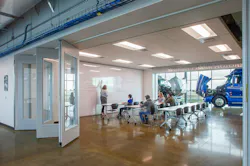
That model has clear facilities implications: flexible labs supporting multiple programs; spaces for simulation, making, testing and applied learning; shared facilities with K-12 systems, employers, healthcare providers or community partners; and locations closer to students, transit and employers. They may also need to support evening, weekend, compressed, and hybrid use.
Research universities, on the other hand, have different roles and face a different set of demands. When information is abundant but confidence, evidence, source credibility, and new knowledge are scarce, original research and trusted inquiry become more important.
At the same time, funding has grown tighter. Federal science and engineering funding for U.S. colleges and universities declined 6.8% between 2023 and 2024, when adjusted for inflation. That’s nearly $2.7 billion less than the adjusted high from back in 2009. As a result, campuses must support their facilities needs in the most efficient and effective ways possible with strategies such as creating overlap among disciplines, accommodating changing combinations of wet, dry, computational, clinical, fabrication and field-based research, and making research more visible to students, industry and the public.
Traditional four-year institutions may face the most difficult choices of all. Their path may be to become a regional economic anchor, an applied research partner, a high-touch institution centered on mentorship and belonging, a specialized institution with recognized depth, or a hybrid combining broad education with applied skills and lifelong learning.
The lesson here is that every institution must fit neatly into one category, but programs, partnerships, student experience and facilities should reinforce the same purpose.
Start with the campus you already have
One recent analysis of 44 private, tuition-dependent New England colleges found that 15 were already facing serious liquidity challenges at current enrollment levels, with that number rising to 21 if enrollment declined just 10% between 2025 and 2029.
These institutions have to invest in an experience that will attract new students while also approaching every single decision with a new level of financial discipline. This often means looking at existing buildings in a new light.
Historical space assignments are not, by themselves, a reason to preserve the status quo. An existing building should be considered against the institution’s future direction. Does it support the programs, experiences, and partnerships the institution is trying to strengthen, or does it reinforce an outdated model?
The answer doesn’t always point to new construction, as many universities have discovered.
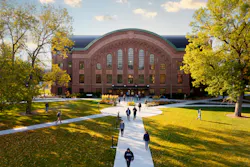
The scale of deferred maintenance makes those decisions increasingly urgent. Gordian’s 2026 State of Facilities in Higher Education report found that deferred capital-renewal needs have reached $156 per gross square foot, an increase of nearly 8% in one year and almost double the level reported in 2007. At the same time, institutions are investing only 73.5% of what Gordian estimates is needed to keep those backlogs from continuing to grow.
For workforce-oriented institutions, planning might begin by mapping regional employers, learner constraints, existing facilities, equipment needs, program demand and potential partnerships.
The solution could be a new building, but it could also be a shared facility, a distributed network, an adaptive reuse project or a phased renovation strategy. Existing industrial, commercial, civic or educational assets may sometimes serve the need better than a new standalone building.
The same principle applies across traditional four-year institutions. With growing renewal needs competing for limited capital, renovation, consolidation, adaptive reuse, or even removal may create longer-term value than adding space when those choices better support the institution’s future strategy.
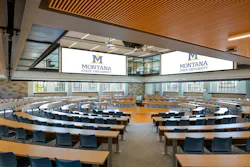
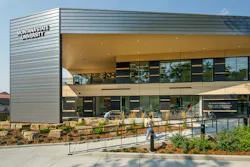
Montana State University’s Mark and Robyn Jones College of Nursing offers a good example of the potential of a distributed model. Rather than concentrating nursing education in one location, the college operates smaller locations across five Montana communities—Billings, Bozeman, Great Falls, Kalispell and Missoula—allowing academics and clinical training to be more closely connected with communities and healthcare needs across the state. New nursing education buildings at each location provide classrooms, simulation labs and other specialized learning environments to strengthen that statewide network.
Put capital where physical experience matters
A clearer sense of purpose can help institutions answer another important question: Which experiences genuinely need physical space?
Labs, simulation, making, performance, research, and applied learning depend on environments that are difficult to replicate online. Collaboration, mentorship, dialogue, belonging, and community also benefit from places that bring people together.
At a workforce-focused college, applied learning environments, simulation, and shared facilities can connect students more directly with employers and community partners and more directly reflect the working environments into which students will graduate.
Research universities obviously have different physical priorities. Their campuses can create overlap among disciplines, make research more visible and strengthen connections between scholarship and industry, public policy, healthcare and community needs.
The value of place may look different again at a high-touch residential institution. Housing, amenities and public spaces can reinforce the mentorship, belonging, dialogue, and human connection that distinguish the experience the institution is trying to provide.
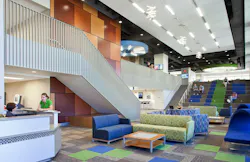
Libraries offer a useful example of how campus spaces can remain relevant as needs change. Many have already evolved well beyond their traditional role as repositories for books, becoming centers for digital scholarship, information literacy, original collections, verification and collaboration. Their evolution is a reminder that staying relevant doesn’t always require a new building or entirely new model; sometimes it means adapting an existing asset around the experiences and capabilities that have become more valuable.
A better framework for campus investment
Facilities teams should consider evaluating a capital project by identifying what it helps the institution accomplish, not only by the space it creates.
Future investments should make strategy more visible, improve adaptability, connect learning to real-world applications, strengthen relationships with employers, researchers, alumni and communities, and make better use of existing assets. Depending on the purpose they serve, they may also support belonging, mentorship, and talent recruitment and retention.
Before a project moves forward, institutions should ask:
- For what will this institution be uniquely valuable in 10 years, and who is it going to serve?
- Which experiences require physical space, and which can happen online, in hybrid formats, at distributed locations or through partners?
- What facilities, equipment or existing buildings could be shared, reused or reconsidered?
- How will the institution measure whether the investment improved enrollment, retention, workforce outcomes, research, belonging or community impact?
These questions don’t necessarily predetermine the design solution but they can help create room to consider more possibilities before the project brief becomes fixed.
Let the institution's direction shape the campus
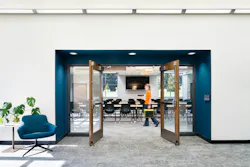
Campus facilities are not neutral containers for programs. They can make institutional strategy visible through how a campus functions.
A workforce-focused institution may organize learning around applied experiences, employers, and community partnerships. A research-intensive university may emphasize relationships among disciplines, research environments, and organizations that help translate new knowledge into practice.
At a high-touch residential college, investment may center on housing, amenities, and public spaces that support mentorship and belonging. An applied regional university may connect classrooms and research more directly with industry, community partners and public space.
The physical response changes because the institutional purpose changes. That’s why campus planning should begin with the future an institution is trying to create rather than a familiar building type or even near-term needs.
When strategy comes first, the campus can do more than accommodate change; it can help make an institution’s future relevance real.
Charlie Deese is a director of design and co-director of the education market at Cushing Terrell, a national multidisciplinary architecture, engineering and design firm. He can be reached at [email protected].