More than 900 University of Utah dorm beds sit empty after housing expansion
Key Highlights
- Over 900 of the university’s 6,946 beds are currently unoccupied, marking a significant change from last year’s full occupancy.
- The new Trailhead residence hall added nearly 1,450 beds but is experiencing lower-than-expected occupancy due to local rental market conditions.
- An increase in off-campus apartment construction has provided students with more housing options, reducing demand for campus housing.
- Changes in student enrollment patterns, especially among out-of-state and international students, are influencing campus housing demand.
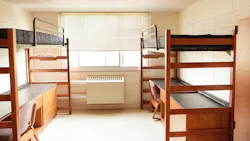
The University of Utah recently disclosed that is has more than 900 empty residence hall beds this fall, just weeks after opening a $155 million housing complex, dubbed Trailhead, that added nearly 1,450 beds to its campus.
About 15% of the university’s 6,946 available beds are unoccupied, according to The Salt Lake Tribune. The vacancy represents a significant change from last fall, when all 5,499 beds were filled and students were on a waiting list for campus housing—a scenario the university also faced in the fall 2024 semester.
The sharp decline comes in the wake of the university’s efforts to transform what has historically been a commuter-oriented campus into a more residential community. President Taylor Randall has set a goal of eventually housing 11,000 students on campus, and additional housing remains part of the university’s long-range physical development strategy, according to the university’s Campus Physical Development Framework.
University officials told The Salt Lake Tribune that the demand outlook looked very different when Trailhead was planned. Spokesperson Rebecca Walsh told the Tribune:
“At the time of the Trailhead groundbreaking, demand far outpaced supply and the trend was supported by market data. Two years later, the market has changed.”
New residence hall significantly expanded capacity
This year, the university opened Trailhead, a six-story, 349,342-square-foot residence hall, for the fall semester. The $155 million project was developed through a public-private partnership with American Campus Communities and can accommodate 1,447 students. Its addition increased the university’s overall student housing capacity to 6,946 beds.
Trailhead includes several dining venues, recreation and fitness spaces, gaming areas, student lounges, and a climbing wall. The project is one of the first major pieces of the university’s “College Town Magic” initiative, which seeks to create a more active campus where students live, dine, study, and socialize rather than commute in and out each day, according to Deseret News.
More off-campus apartments are competing for students
The university points primarily to changes in the Salt Lake City rental market to explain the vacancies. A wave of new apartment construction has increased off-campus availability and placed downward pressure on rents, giving students more alternatives to university housing.
Yardi Matrix reported in its Multifamily Market Report that developers completed 9,430 multifamily units in the Salt Lake City market in 2025, equivalent to 6.7% of the area's existing apartment inventory. Another 10,082 units were under construction as of February 2026. Average advertised asking rents declined 0.4% on a trailing three-month basis through February as the additional supply constrained rent growth.