Analy High School opens 15,000-square-foot CTE center
Key Highlights
- The center includes advanced welding studios, culinary arts spaces, agricultural classrooms, and flexible collaborative areas to support diverse technical programs.
- Designed to exceed California energy efficiency standards, the facility emphasizes sustainability alongside modern, industry-aligned instruction.
- Collaborative efforts among district staff, educators, architects, and contractors ensured the spaces meet both instructional and workforce development needs.
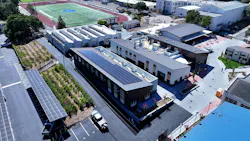
West Sonoma County Union High School District has opened a new 15,000-square-foot Career Technical Education Center at Analy High School in Sebastopol, Calif., expanding the campus with dedicated spaces for engineering, welding, design thinking, culinary and hospitality arts, and agricultural sciences. The single-story facility, designed by Quattrocchi Kwok Architects (QKA), was funded with local Measure A bond proceeds and is designed to accommodate up to 371 occupants.
Students began using the center at the start of the 2026–27 school year, following nearly five years of planning, design, funding, and construction, according to Analy High School.
Kevin Chapin, principal at QKA said in a press release:
“We wanted to build a flexible, inspiring space where students can dive straight into hands-on learning. Seeing students step into these studios and immediately engage with the materials and technology is the ultimate validation of this work.”
Specialized spaces support hands-on learning
The CTE center includes a fabrication studio equipped for advanced welding, a culinary arts center with auxiliary preparation areas, agricultural science classrooms, a technology lab, a collaboration room, two flexible classrooms, and gender-neutral restrooms. QKA explains that the programs are intended to give students experience with tools, equipment, and work environments that more closely reflect current industry practices. District administrators, Analy educators, facilities staff, architects, and contractors collaborated on the spaces to align them with instructional requirements and local workforce needs.
Analy High School says the center supports programs in agricultural sciences, agricultural welding and fabrication, culinary arts and hospitality, innovation and emerging technologies, and flexible collaborative learning.
“This facility is a huge investment in the future of our students,” West Sonoma County Union High School District Superintendent Chris Meredith said in the project announcement. He added that access to modern learning environments and industry-grade equipment will give students a stronger foundation for pursuing career interests and developing practical skills.
CTE building exceeds California energy standards
The project also was designed to exceed California’s Title 24 building energy-efficiency requirements, according to the district and QKA. The new center is part of broader improvements at Analy High School supported by Measure A. Construction activity during the summer included work on the CTE facility as well as improvements to the front of the campus. (Watch the video below to see the progress of construction on the project.)
The district has described the CTE center as one of its largest investments in career education, with the new spaces intended to prepare students for both postsecondary education and employment.
Why this matters
Career and technical education programs often place different demands on school facilities than traditional classrooms. Welding and fabrication labs, commercial-style culinary spaces, agricultural science rooms, and technology labs require specialized equipment, building systems, utilities, ventilation, storage, and flexible instructional layouts.
Analy High School’s new center shows how a locally funded capital project can connect facilities investment directly to workforce-development goals. Rather than adding general classroom capacity, the district used Measure A funding to create purpose-built environments for programs that require equipment-intensive, hands-on instruction.
The project also offers a useful example of how districts can incorporate energy efficiency and adaptable learning space into CTE investments as workforce programs and instructional needs continue to evolve.