Beyond the numbers

By Ben Thompson
School consolidation discussions are becoming more frequent and more charged. Changing enrollment trends, aging facilities and mounting pressure to use public dollars more efficiently are pushing school systems to ask hard questions: Which buildings should we maintain, reinvest in, or close? But the decision to consolidate is not always clear-cut, and reacting to limited or simplistic datapoints rarely leads to the right answer.
School facilities are long-term investments that are shaped by educational delivery, community identity, and financial obligation for decades to come. If evaluated too narrowly, districts often fail to see options that become visible only through hindsight.
Reshaping the conversation
Several factors are converging to bring facility planning into sharper focus. First, many buildings constructed in the 1960s, 1970s and 1980s are reaching the limits of their useful life. Rising energy costs, deferred maintenance and updated code requirements make continued operation increasingly expensive. In some cases, renovation at the level required to meet existing needs effectively involves rebuilding significant portions of the facility. The building has not necessarily failed, but it may have outlived its ability to justify continued investment.
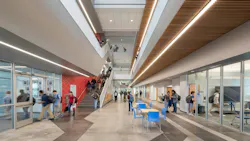
Demographic shifts also are reshaping enrollment in ways that do not follow a uniform pattern. Some districts are contracting because of population movement; others are seeing uneven growth across attendance zones. These patterns push districts to examine how space is distributed across their whole systems, not just within individual schools.
A third factor often is underestimated: Educational delivery has changed in ways most older buildings were never designed to support. Most students do not learn best through lecture-based instruction alone. Schools in the 20th century were designed primarily with that style of instruction in mind.
Because of what we expect today from a student outcomes perspective, learning methodology engages with material through multiple modes, including discussion, application, iteration and project work. Facilities designed around rows of desks and a teacher at the front may struggle to support the collaborative, interdisciplinary instruction that many districts are working to provide.
Analyzing enrollment decline
Declining enrollment is usually what starts the conversation — but it should not end it.
Effective facility planning considers a range of factors: a building’s physical condition, use and utilization levels, demographic forecasts, operating costs and long-term capital investment needs. Looking at these together helps districts understand how each facility contributes to broader system goals and where the greatest needs exist.
Some underutilized buildings still provide long-term value because of their condition, adaptability or location. Others require increasing investment just to maintain basic functionality. The difference between those two situations cannot be determined from enrollment figures alone. It must be established through analysis.
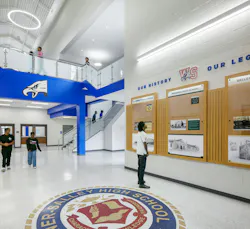
Underutilized vs. obsolete
One of the most consequential distinctions in facility planning is the difference between a building that is underutilized and one that is functionally obsolete. The two are not interchangeable.
An underutilized building may have excess capacity relative to current enrollment but still be in good condition and capable of supporting evolving programs or future growth. Closing it prematurely means giving up a usable asset.
Functional obsolescence is a different problem. It describes facilities where layout, infrastructure or building systems limit adaptation to contemporary educational needs. These buildings also may carry operating costs that have become unsustainable, not because of one bad year, but because the trajectory is clear.
Conflating the two can lead to poor decisions in both directions: maintaining facilities that no longer support educational goals or closing ones that still can provide long-term value.
Beyond consolidation
When districts evaluate facilities across their entire system, additional options often emerge alongside consolidation. These may include reconfiguring grade levels across schools, adjusting attendance boundaries, modernizing existing buildings or introducing specialized programs that make better use of available space. Each of these approaches can improve efficiency while preserving assets that continue to provide value.
A comprehensive planning process typically considers multiple factors together, including historical enrollment patterns, demographic forecasts, facility conditions, utilization levels and long-term capital investment needs. Looking at these inputs collectively helps districts understand how each building contributes to broader system goals and where reinvestment will have the greatest effect.

Cleveland County Schools in North Carolina had several elementary schools operating below capacity. One facility was nearing the end of its useful life and required significant reinvestment to remain viable. Some areas in the district were declining while others were stable. Through an assessment of economic and enrollment trends, districtwide teacher surveys, facility conditions and long-term capital needs, planners explored options on how to redistribute students to save annual operating costs and near-term major renovation costs.
The solution combined three schools into two stronger-performing schools, both of which had the capacity and physical condition to support future demand. While doing so, the district also established an educational specification to evaluate all of its attendance zones so it could optimize all its facilities. This approach improved utilization across the district, reduced operating costs and avoided a major capital investment in a building that no longer provided long-term value.
In a high-growth area in the upstate of South Carolina, several aging schools were looking at multiple renovation projects to accommodate enrollment increases. Instead, a broader system-level analysis of facility condition, program needs and projected capacity brought about a more effective and less costly solution.
By constructing a single new high school and reallocating grade levels among existing facilities, the district was able to modernize its highest-cost building type while extending the useful life of other school facilities. High schools tend to be among the most complex and expensive educational facilities to construct, given their size and specialized program spaces. Even so, this approach proved more cost-effective than renovating four separate buildings. Evaluating options at the system level clarified the most practical long-term investment strategy and put the district on a sustainable facilities path for the next 30 years.
In both scenarios, decisions were shaped by a broader understanding of how facilities function together rather than individually. The goal of this type of analysis is to be data-informed, not data-driven. Data helps define the parameters of the conversation, but it’s only part of what defines the outcome.
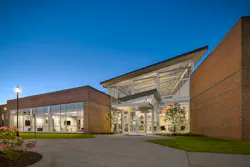
Community engagement
School buildings carry meaning beyond their square footage. They anchor neighborhoods, hold institutional memories and shape how communities see themselves. When consolidation is on the table, the response is often emotional, and that should be expected.
The most productive approach for district decision-makers is often the most direct: Share the data, name the constraints and present real options, including ones the community may not want to hear. Sugarcoating the situation tends to erode trust. Clear, direct communication, even when uncomfortable, tends to build it.
Effective engagement does not stop at a single public meeting. Ongoing sessions, surveys, focus groups with educators and structured conversations with parents enable districts to draw attention to concerns that data alone will not show. Decision-making authority rests with school boards, acting on recommendations from district leadership and planning professionals, but decisions made through a genuine, ongoing process tend to be better understood and more durable.
Long-term relevance
Facility decisions made today will shape how effectively schools support instruction for decades. This makes it important to consider not only whether a building has sufficient capacity, but also whether it can adapt as educational approaches evolve.
Many districts are placing greater emphasis on collaboration, applied learning and interdisciplinary instruction. These approaches often require spaces that support multiple teaching formats rather than environments designed around a fixed classroom configuration. Flexible layouts, varied room sizes and shared breakout areas enable educators to adjust how space is used as curriculum needs change.
Facilities that cannot accommodate this level of adaptability may require significant reinvestment sooner than anticipated. In contrast, buildings designed to support a range of instructional approaches are more likely to remain viable and adaptable as educational models evolve.
Considering how spaces support teaching and learning helps districts make capital decisions that provide value over a longer time. That reduces the likelihood that a district will have to resort to major modifications to keep a facility viable.
School systems are experiencing change at an accelerated rate in multiple dimensions. Restating and clearly defining the purpose of any individual school within a system requires engagement and sometimes debate. Involving partners to prepare a well-informed discussion on what a vision for the district’s future should look like will help untangle fact from fiction.
School consolidation decisions are rarely about a single building. They are about how an entire system can best support students, educators and communities over time.
Looking beyond enrollment enables districts to better evaluate how facilities contribute to educational outcomes, operational efficiency and long-term financial stewardship. With a clear understanding of facility performance, projected demand and capital priorities, decision-makers can focus on making the best use of available resources — today and in the future.
Ben Thompson, AIA, ALEP, leads the K-12 practice area from the Charlotte, N.C., office of McMillan Pazdan Smith Architecture.