DeKalb County (Ga.) district proposal looks at closing as many as 27 schools
Key Highlights
- The district is considering closing 27 schools to address declining student numbers.
- 11 schools would be expanded.
- Several high schools may be converted into middle schools, and some middle schools into elementary schools.
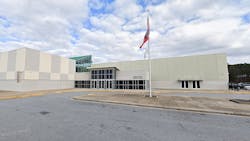
In response to declining enrollment, the DeKalb County (Georgia) district is looking at possibly closing 27 schools.
Decaturish reports that the facilities proposal also would expand 11 schools in the district.
The proposal is not final and may change based on public input; the board is expected to decide on the recommendations in late fall. Of the potential closures, 26 are elementary schools, and one is a middle school.
The initial recommendations call for three high schools to become middle schools and five middle schools to become elementary schools.
No schools will close during 2026-27, and boundaries and school programs will not be evaluated until building closures are finalized later this year.
Once finalized, the reorganization would be carried out over six to eight years.
The elementary schools that could be closed: Ashford Park, Canby Lane, Columbia, Rowland, Toney, McLendon,Robert Shaw, Kingsley, Vanderlyn Evansdale Henderson Mill, Oak Grove,Redan, Stoneview, Woodridge, Cedar Grove, Flat Shoals, Kelly Lake, McNair Discover Learning Academy, Browns Mill, Rock Chapel, Bob Mathis, Stone Mill, Stone Mountain, Brockett and Midvale.
The one middle school on the closure list is Cedar Grove.
Elementary school buildings set for expansion in the initial proposal: Chesnut, Montgomery, Hightower, Huntley Hills, Oakcliff, Hawthorne, Livsey, Briarlake, Laurel Ridge, Sagamore Hills and Briar Vista.
Towers, Lithonia and Cedar Grove high schools would be converted into middle schools.
Bethune, Champion Theme, Lithonia, McNair and Miller Grove middle schools would turn into elementary schools
Sarita Smith. DeKalb's executive director of student assignment, says the disrict will have multiple rounds of reorganization scenarios, each receiving feedback before the board makes a final decision.
“This is going to happen several times,” Smith said. “What we start with is definitely not going to be what we end up with, and that is intentional because if we started at the end, then we didn’t give the community a chance to give us input.”
A 150-member advisory committee was the first to receive the redistricting information. The committee has worked for the past 20 months to help create a system for making the district's buildings, boundaries and programs more efficient. The DeKalb district has more than 20,000 open seats across its 138 schools.
Board members have emphasized that it would be impossible for everyone to be satisfied when school closures are being considered.
“There's no way to close schools in a way that makes your community, everybody, happy," School Board member Whitney McGinniss said last year. "In the end, we’re going to do the best we can, and I think being responsive to the community feedback is critical.
About the Author
Mike Kennedy
Senior Editor
Mike Kennedy has been writing about education for American School & University since 1999. He also has reported on schools and other topics for The Chicago Tribune, The Kansas City Star, The Kansas City Times and City News Bureau of Chicago. He is a graduate of Michigan State University.