New ICC building code changes strengthen gate safety requirements
Key Highlights
- The ICC's new codes incorporate ASTM standards to improve gate safety and maintenance across various public and private facilities.
- These updates are driven by safety concerns, including a tragic school accident that underscored the need for stronger safeguards.
- Facilities teams are encouraged to review and upgrade their gate systems to meet new safety and inspection standards.
- The changes aim to reduce preventable injuries and fatalities by clarifying maintenance expectations and safety protocols.
- School districts and property owners should prioritize perimeter and access gate safety as part of their security and safety strategies.
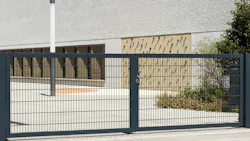
The International Code Council recently announced several new building code changes that are expected to strengthen safety requirements for gates in schools and other public settings. The ICC approved four code change proposals that will update model code language tied to gate safety and maintenance which will affect commercial properties, schools, multifamily housing, parks, and other public spaces where automated or manually operated gates are in use, according to an official announcement.
The approved proposals incorporate recognized ASTM safety standards for horizontal slide gates and swing gates into multiple model codes, while also reinforcing maintenance expectations for existing gates. The changes are intended to improve consistency in how gate systems are designed, installed, inspected, and maintained, and because ICC model codes often influence future state and local code adoption, the changes could also shape how school districts and other facility owners approach new construction, renovation, and ongoing maintenance.
The announcement also ties the effort to long-standing safety concerns around gates in schools, following the untimely death of 7-year-old Alex Quanbeck, who was killed when a gate fell on him at school, as one of the tragedies that helped drive awareness of the issue.
Eric Quanbeck, co-founder of Ready, Set, Safe! in a press release:
“These safety measures represent an important step forward in helping prevent serious injuries and fatalities caused by unsafe gates. After losing our son Alex, we committed ourselves to making sure stronger safeguards exist for other families. We are deeply grateful to the ICC, the American Fence Association, and the many industry professionals who worked collaboratively with us to make these improvements possible.”
The release also cited California OSHA records showing at least 48 additional serious injuries and fatalities related to gates in public and private facilities. Supporters of the changes say the new code language should help reduce preventable accidents by making expectations clearer for property owners, contractors, and facilities teams.
For schools and their facilities teams, the practical implications may include paying closer attention to perimeter gates, parking and service access points, playground and athletic-area gates, and maintenance procedures tied to moving gate systems.
Why this matters
Gate safety is a major compliance issue that needs to be a priority for school administrators and facilities teams, as well as a maintenance and student safety issue. These code updates are a reminder that access-control features and perimeter security elements need the same level of inspection and preventive maintenance as other building systems.
The changes also matter because gates are becoming a more common part of school safety strategies and many districts and campuses are investing in security upgrades. As a result, facilities teams may need to review whether existing systems meet updated standards and whether maintenance protocols are strong enough to reduce risk.