inside
Furnishing neuroinclusive learning spaces
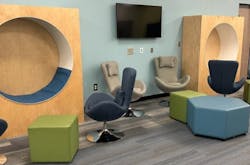
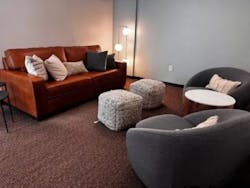
Two reconfigured classrooms and a student lounge at Elon University in North Carolina have been created to offer additional neuroinclusive learning spaces on campus.
The spaces in Linder Hall have been designed with neurodivergent students in mind and aim to support a variety of learning styles and sensory needs while benefiting all students.
Lindner Hall classrooms 204 and 210 have adjustable, mobile and varied-height seating, chairs with and without arms, tall stools with slight wobble for sensory feedback, and individual writing surfaces.
The classrooms can be reconfigured for different teaching styles, and can also be organized into zones for quiet reflection or active discussion
A neuroinclusive lounge in Lindner Hall Suite 200 provides a calming space for anyone in need of a sensory break or a quiet space to work. It is outfitted with sensory-friendly and ergonomic furniture, minimized visual and auditory clutter, varied textures and surfaces, and biophilic design elements with neutral colors. Lighting and seating options can be adjusted for individual needs.
“One of the primary goals was to upgrade these classrooms so that they were inclusive of needs that support neurodivergent students,” said Caroline Ketcham, associate dean in the College of Arts and Sciences.
Study calls for prioritizing ergonomic, flexible school furniture
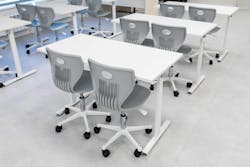
As schools adapt to evolving teaching methods, increased technology, and rising numbers of students with special needs, outfitting learning spaces with ergonomic, flexible furniture is more essential, the Furniture Industry Research Association (FIRA) says.
The United Kingdom-based association's research study, "An Exploration of Educational Furniture Procurement," has identified systemic issues that hinder schools from obtaining high-quality, ergonomic furniture.
Budget constraints, outdated procurement processes, and a lack of ergonomic awareness on student well-being and learning outcomes all contribute to less-than-ideal furniture selection, which may affect student performance.
"Poorly designed classroom furniture can contribute to poor posture, discomfort, and reduced concentration, ultimately affecting learning outcomes," FIRA says in a news release.
Some of the study's findings:
- Budget limitations force schools to prioritize cost over ergonomics, leading to non-compliant and outdated classroom furniture.
- Restricted procurement choices mean schools often rely on the same limited product catalogues, missing out on innovative solutions.
- Lack of ergonomic awareness results in purchasing decisions that do not prioritize student comfort or posture.
The association encourages schools, suppliers and policymakers to look into how they can improve procurement processes to prioritize student well-being.
Classroom furniture keeps students on the move
Classrooms at Mangrove Bay Middle School in St. Petersburg, Florida have traded in traditional desks for ones that keep students moving while they learn.
Fox 13 Tampa Bay reports that Mangrove Bay students are likely to be found using pedal desks, balance stations, boomerboards or treadmills that keep them active as they complete their lessons.
“When kids are moving, they’re more engaged,” says Principal Brett Patterson. “We want learning to be something they experience with their whole body and mind. The days of sitting in rows, listening passively, are behind us. We’re creating an environment where learning is active, collaborative, and fun.”
The magnet school focuses on health and wellness, and partners with the YMCA. Research has shown that having students engage in physical activity enhances their learning.