How laminated glass can help balance school security, daylight and design
Key Highlights
- Laminated glass with PVB interlayers can help delay forced entry while preserving bright, open school spaces.
- Vanceva color interlayers offer aesthetic and functional design flexibility with more than 69,000 color options.
- Laminated glass made with Saflex and Vanceva PVB interlayers can combine security, acoustics, solar control and structural performance in one glazing system.
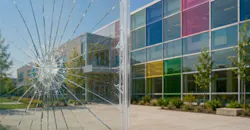
Modern school design balances priorities that can feel at odds: creating open, light-filled learning environments while helping protect the people inside from threats. Laminated glass made with Eastman’s Saflex™ and Vanceva™ PVB interlayers can help schools strengthen their security strategy while preserving the daylight, openness and design flexibility that support comfortable, engaging learning spaces.
Understanding laminated glass and PVB interlayers
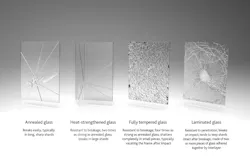
Laminated glass is made by bonding two or more layers of glass together with an interlayer, such as polyvinyl butyral (PVB). The interlayer gives laminated glass much of its protective performance. When glass is struck or broken, the PVB interlayer helps hold broken pieces in place rather than allowing them to fall away and create a pass-through opportunity. This can help reduce injury from flying shards and help slow forced entry. Saflex and Vanceva are PVB interlayer brands designed for laminated glass used in architectural applications.
Why glass matters in school security
Windows and doors are often perceived as vulnerable points in a building’s exterior. Ordinary glass can be broken with relative ease, and once an opening is created, an intruder may be able to reach through, release a lock or step through. While no single product offers complete protection from a determined attack, laminated glass made with Saflex and Vanceva PVB interlayers can help deter or delay entry as part of a broader security strategy.
Effective school security relies on a layered approach. The building exterior — including entry doors, ground-level windows, glass panels beside doors and skylights — is one important layer. Interior barriers such as secure vestibules, locking corridor doors, classroom doors, office doors and glass partitions can provide additional layers of protection. Security glass can play an important role by helping slow access and providing additional time for response measures.
Understanding the ASTM F3561 standard
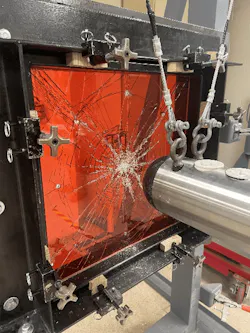
ASTM F3561, the Standard Test Method for Forced-Entry-Resistance of Fenestration Systems After Simulated Active Shooter Attack, is an important benchmark for evaluating windows and door systems in school applications. Developed by the ASTM International F12 Security Committee, the standard addresses gaps in earlier test methods that were not always repeatable or reflective of current threats.
ASTM F3561 testing involves firing ten 5.56-millimeter M193 ballistic rounds at laminated glass to pre-weaken it, followed by escalating impacts with a 100-pound torpedo-shaped impactor. The standard includes eight performance levels. This is not a ballistic-resistance test; the bullets are intended to pre-weaken the glass and are expected to pass through.
Saflex PVB interlayers can be used in a range of laminated glass configurations tested to the glass-only portion in the appendix of the standard. Composite interlayers such as Saflex VS can help reach higher performance levels while maintaining thinner laminated glass constructions. Full-system testing, which evaluates the frame, glass and hardware together as an integrated assembly, is required for ASTM F3561 classification.
Color, light and design freedom with Vanceva
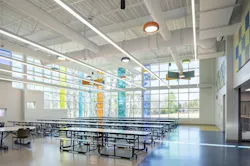
Security glass does not have to look institutional. Vanceva color PVB interlayers offer more than 69,000 color possibilities, giving architects design flexibility while maintaining the protective performance of laminated glass. In educational settings, color can serve aesthetic and functional purposes. Bright hues can energize collaborative learning spaces and creative studios and present school colors. Softer tones can help create calming environments in libraries and quiet study areas. Color can also support wayfinding by helping students and visitors identify zones, grade levels or departments.
Vanceva PVB interlayers have demonstrated equivalent performance to Saflex Clear in the same configurations across common security tests. That means schools do not have to choose between protection and design; they can incorporate both into the same laminated glass assembly.
Where security glass can make an impact
Any exterior window accessible from ground level may be a candidate for security glass, as are windows on upper floors that could be reached from adjacent structures or landings. Entry doors — made primarily of glass, designed with glass inserts, or paired with glass panels on one or both sides — are also important areas to evaluate. Interior applications may include classroom doors, office doors, glass partitions, service windows and administrative entry points, especially where lockdown procedures rely on quickly evaluating interior spaces.
Eastman’s published test results, including those for ASTM F3561, reflect glass-only configurations tested in fixed or neutral frames. Certified system-level performance requires testing of the complete window or door system by the system manufacturer; several manufacturers have completed this testing with Eastman interlayers in laminated glass. When specifying security glass, decision-makers should assess site-specific risks, threats and vulnerabilities. They should also consult qualified glass professionals and confirm that the selected glass constructions and systems have been tested and certified for the intended application.
Beyond security: acoustic, solar and structural benefits
Security performance does not have to come at the expense of other building priorities. Acoustic interlayers can help reduce noise transmission, supporting more comfortable learning environments. Solar interlayers can help manage heat gain and UV exposure. Laminated glass configurations can also support structural performance, larger spans of glass and ambitious architectural designs. With the right configuration, a laminated glass assembly can help support security, acoustic comfort, solar control and design flexibility in one specification.
A thoughtful investment in safer schools
School security is a complex challenge that cannot be solved by any single product or strategy. But the building envelope — and the glass within it — represents an important opportunity to help slow or deter intrusion while preserving the open, light-filled environments that today’s schools strive to create. Laminated glass made with Saflex and Vanceva PVB interlayers can help schools address that challenge with a balance of tested security performance, daylight, color and design flexibility.
To learn more about laminated glass solutions with Saflex and Vanceva PVB interlayers, visit saflex.com.
Note: Performance depends on the complete glazing system, including glass construction, framing and installation details. Security classifications should be based on testing of the specific system configuration.
Sponsored by: